Erik Loyer

HOME   ABOUT   WORKS   CONTACT

Works

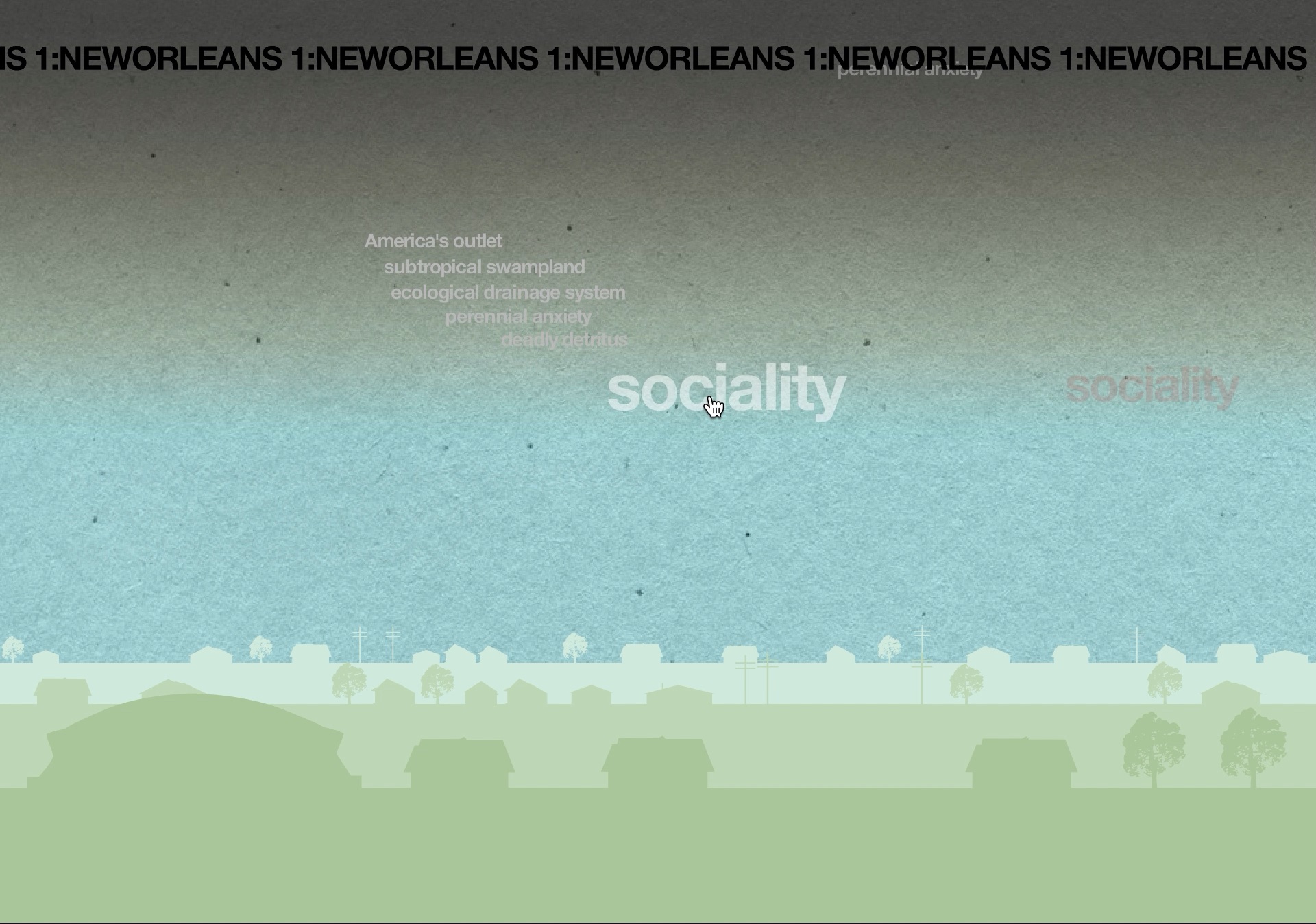
Scores for City Symphonies

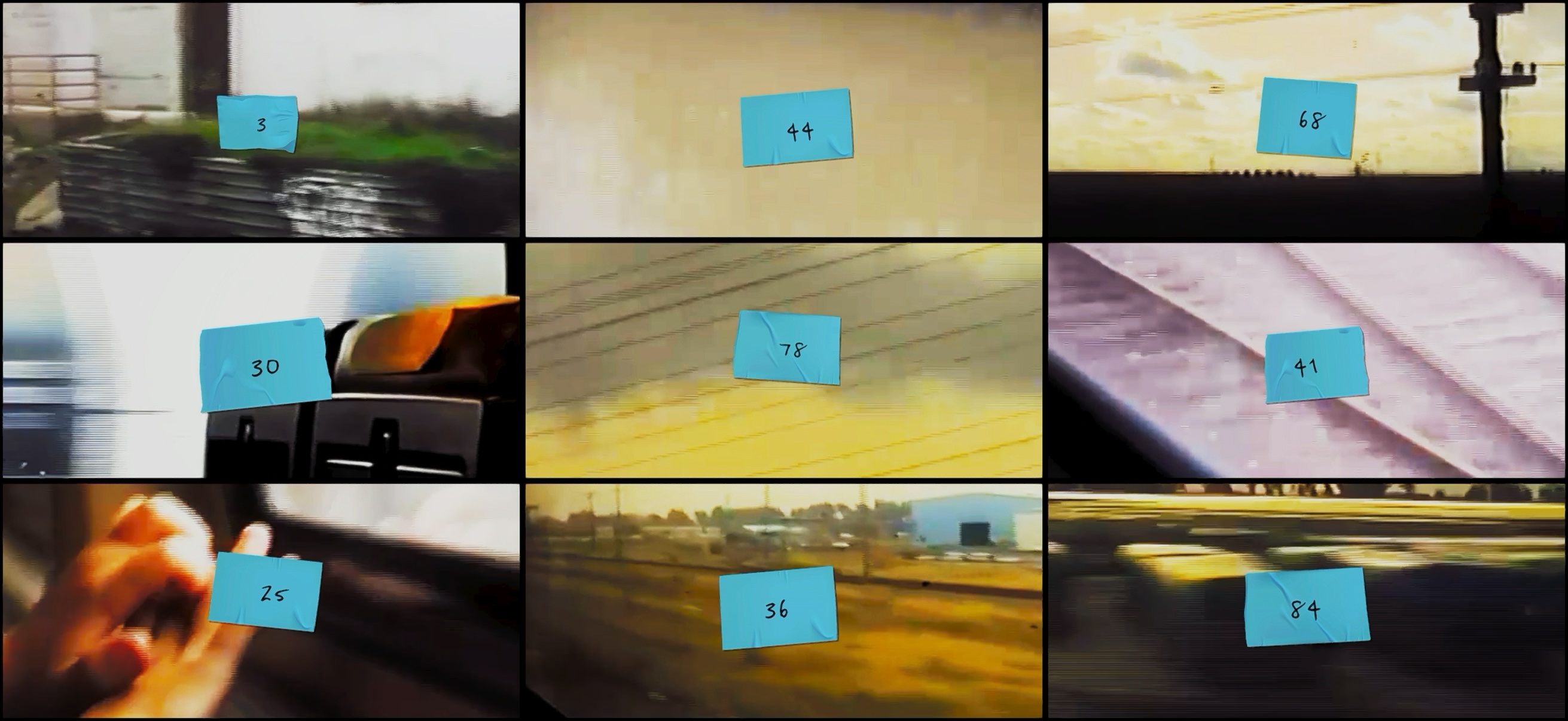
Image from 95 Moments on a Train

95 Moments on a Train

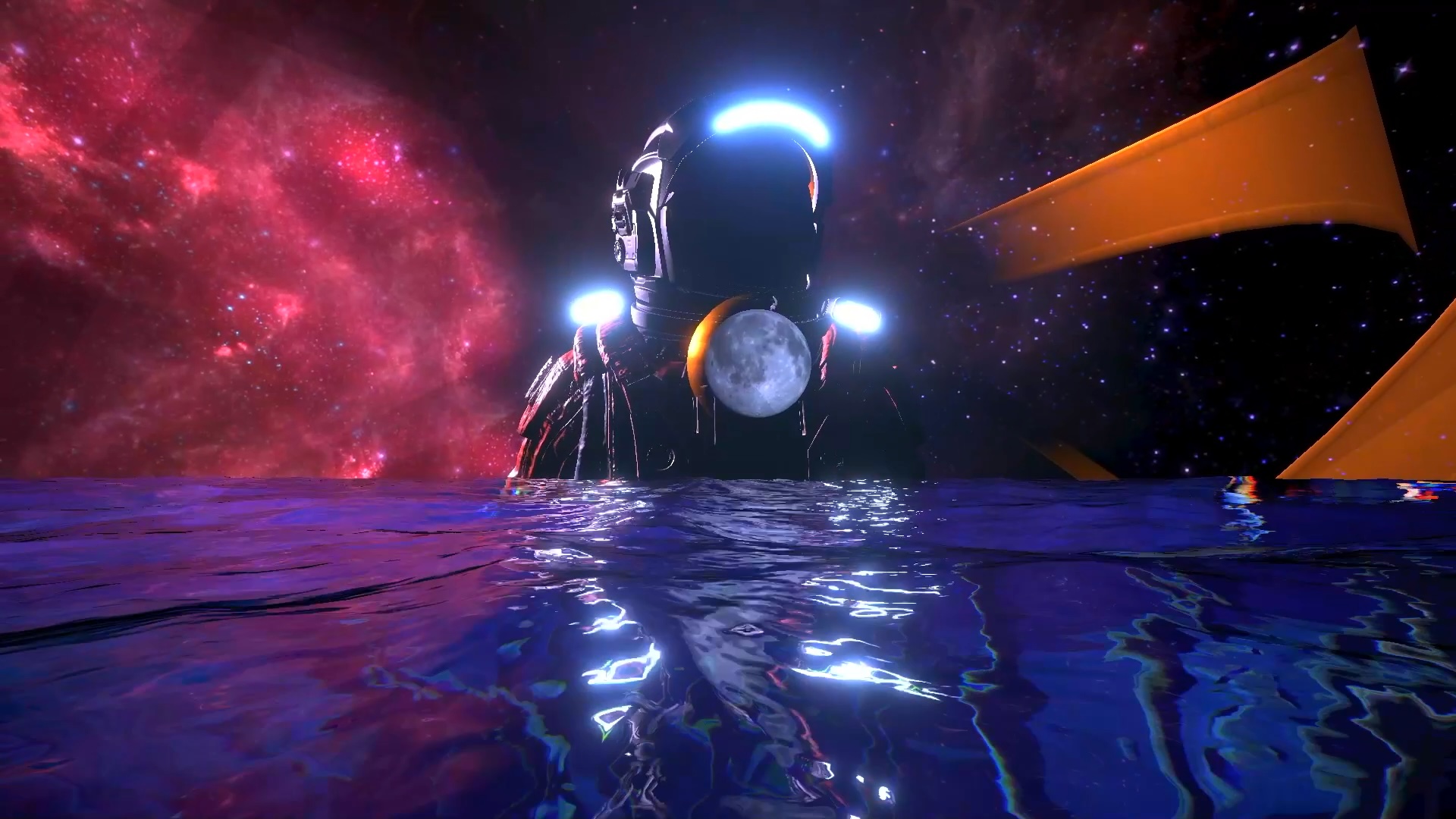
Image from Conundrum Luna

Conundrum Luna

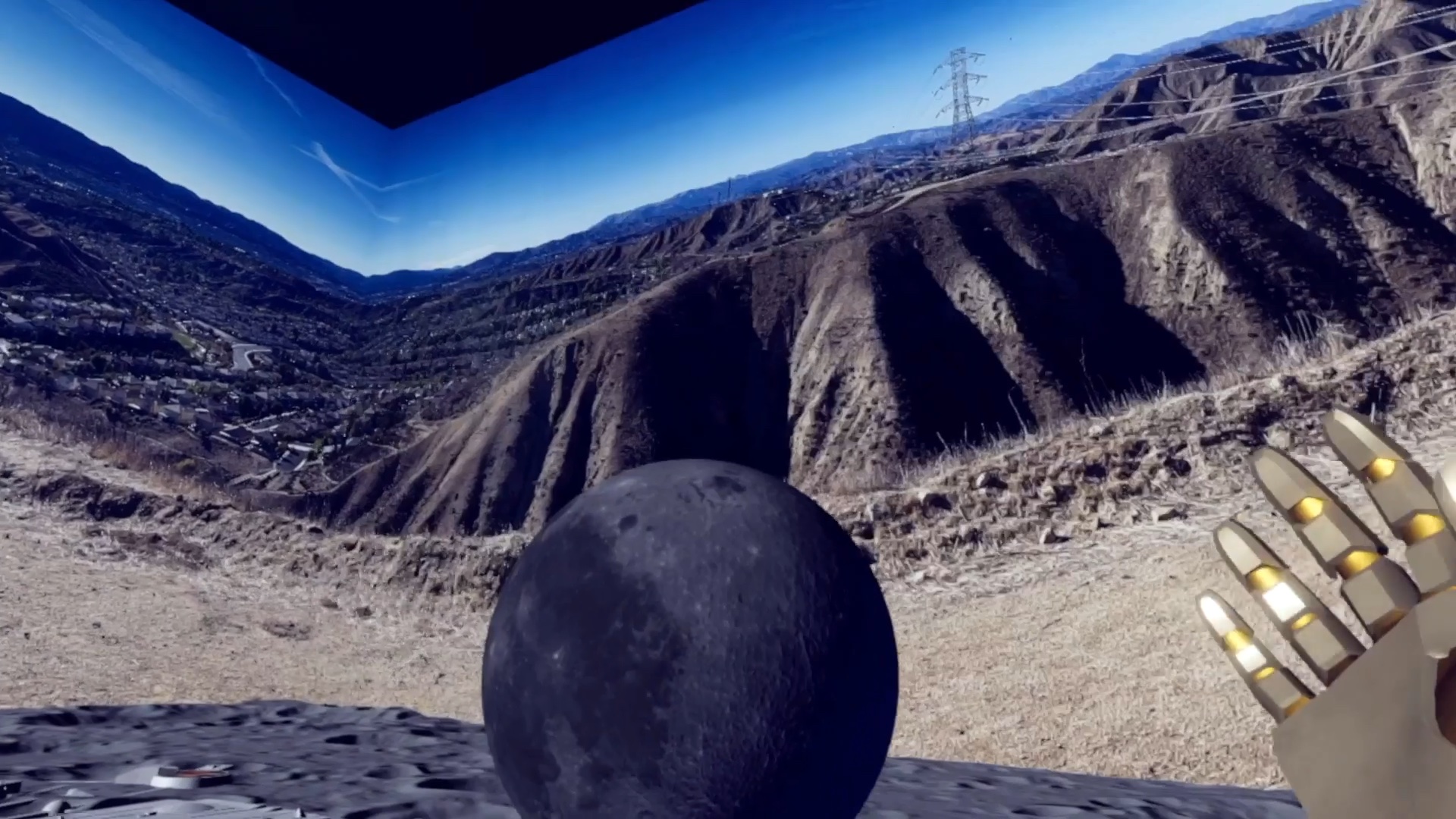
Image from I Was a Ship in Space

I Was a Ship in Space

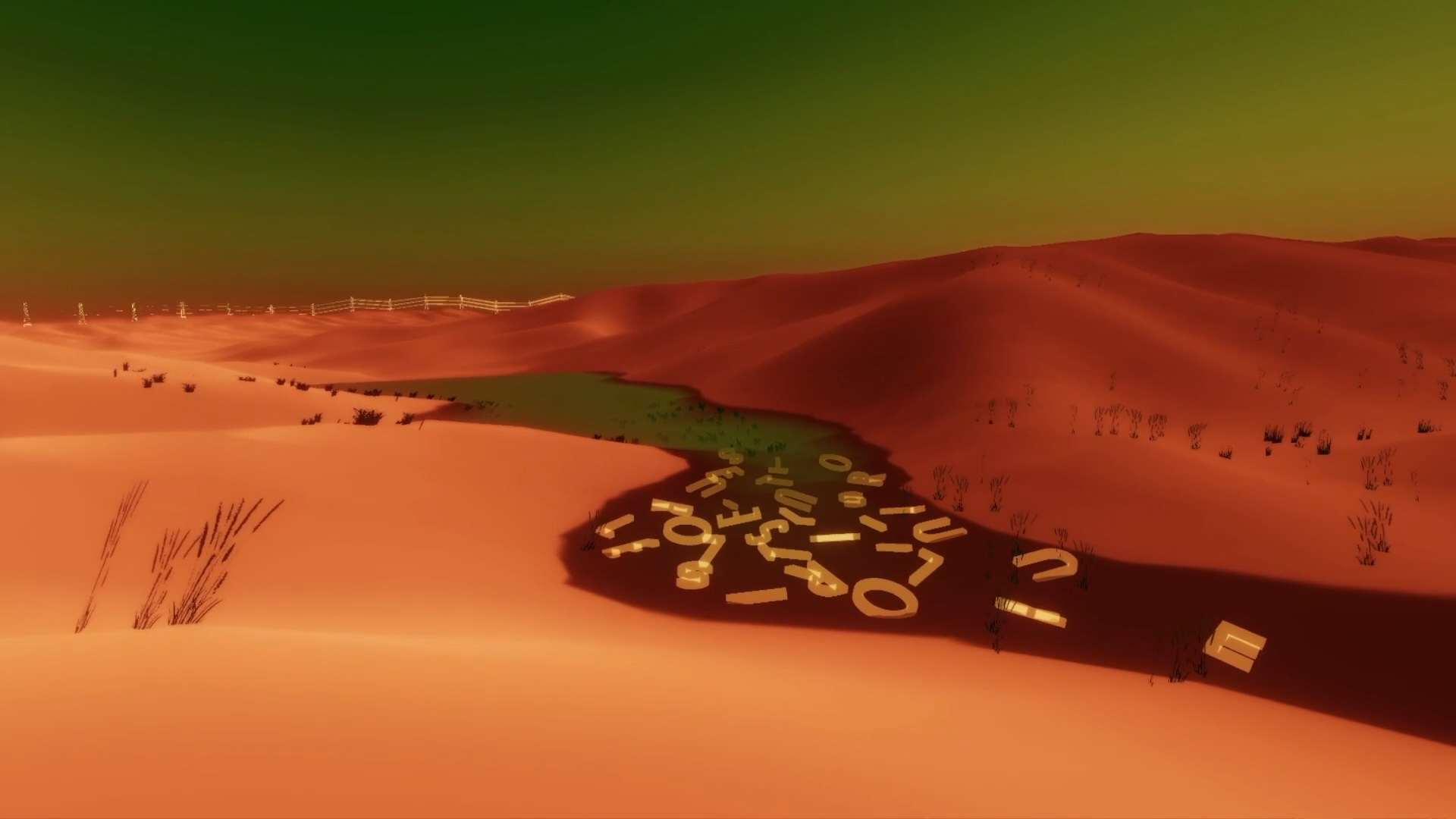
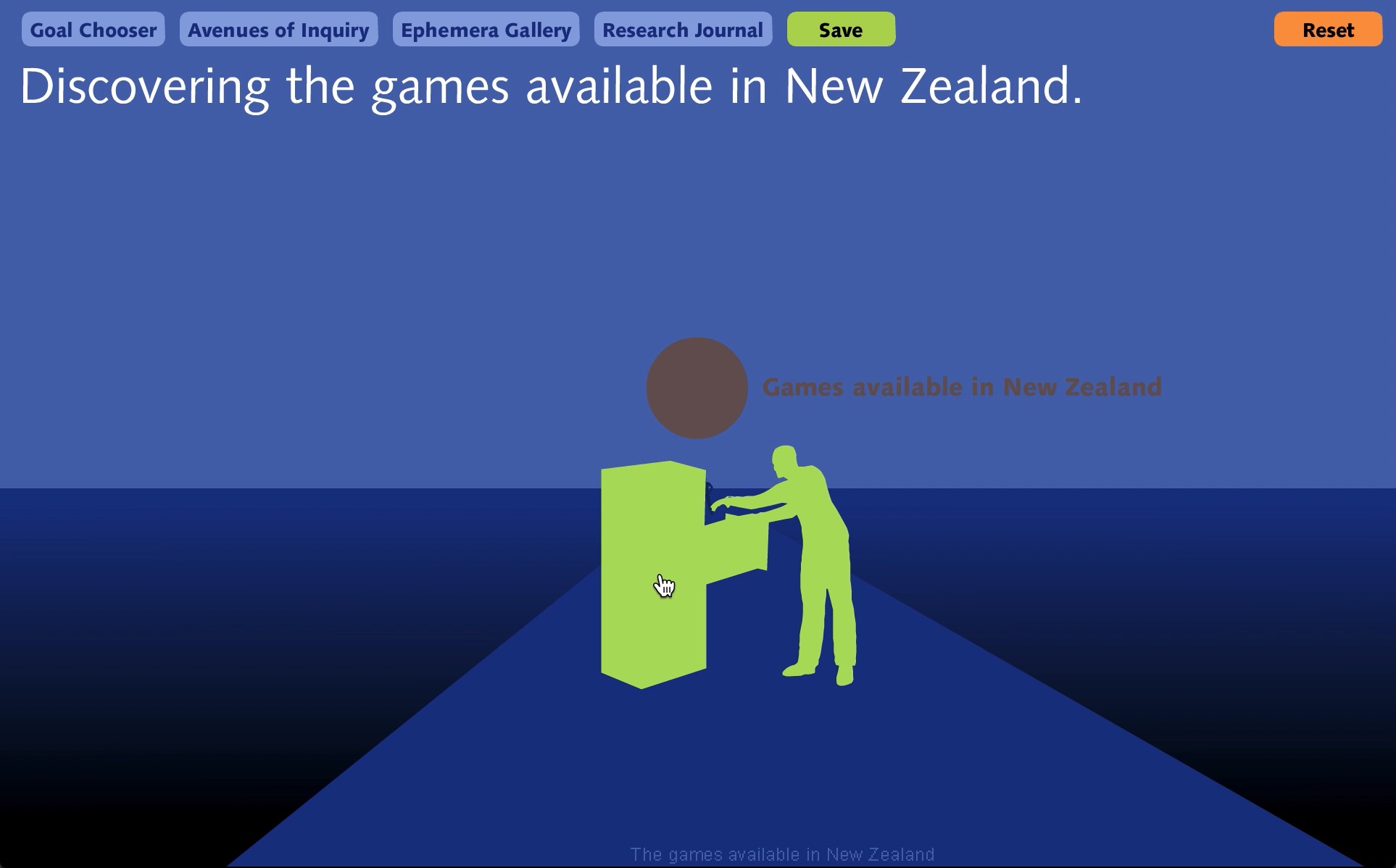
Image from Text + Terrain

Text + Terrain

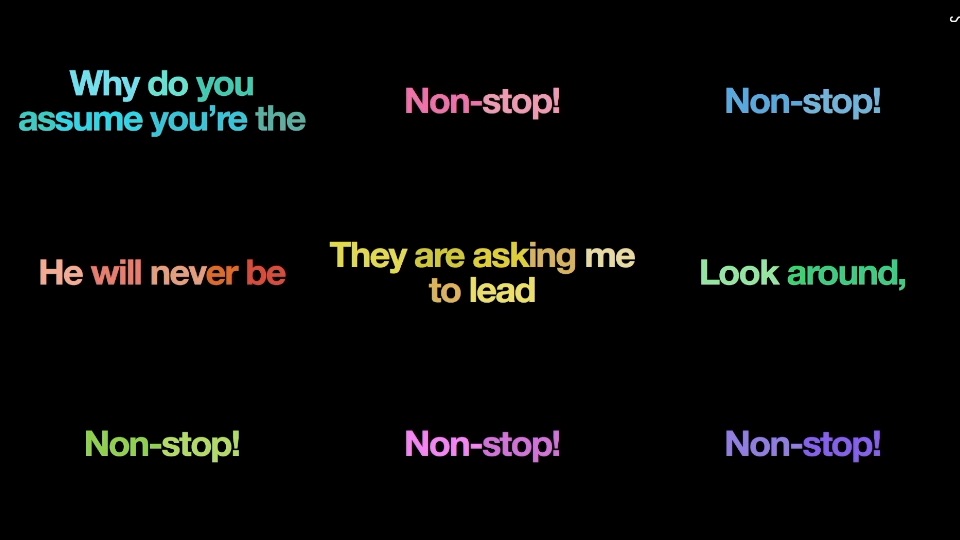
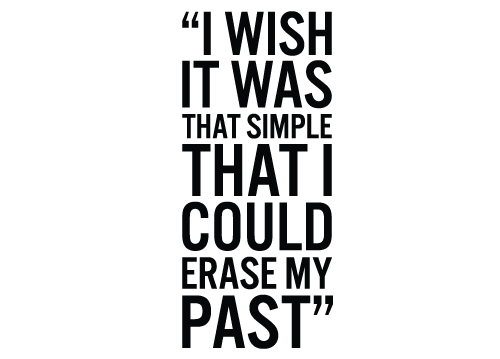
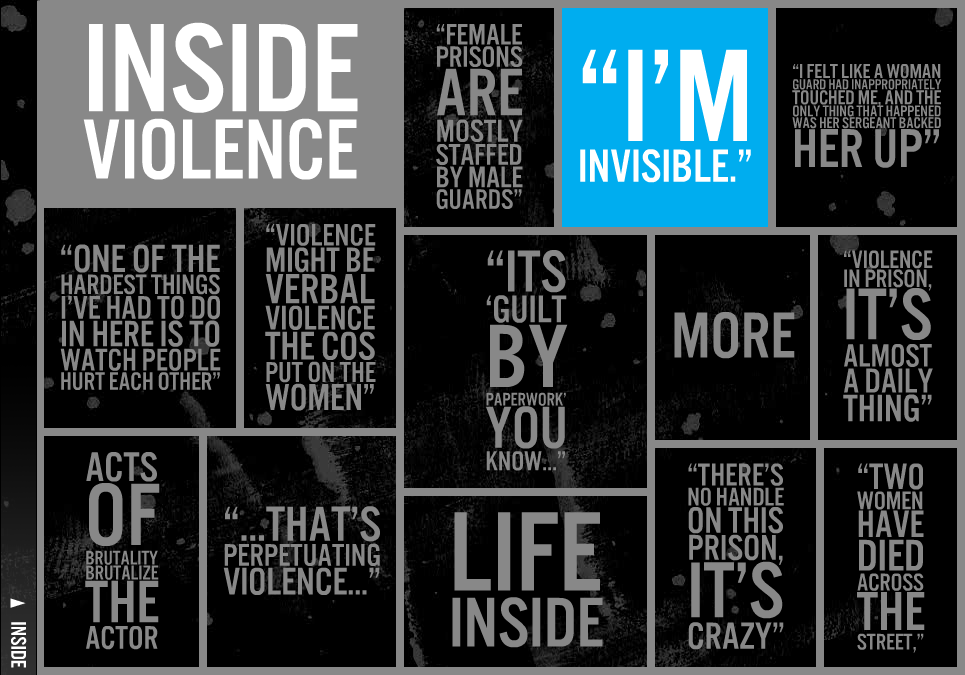
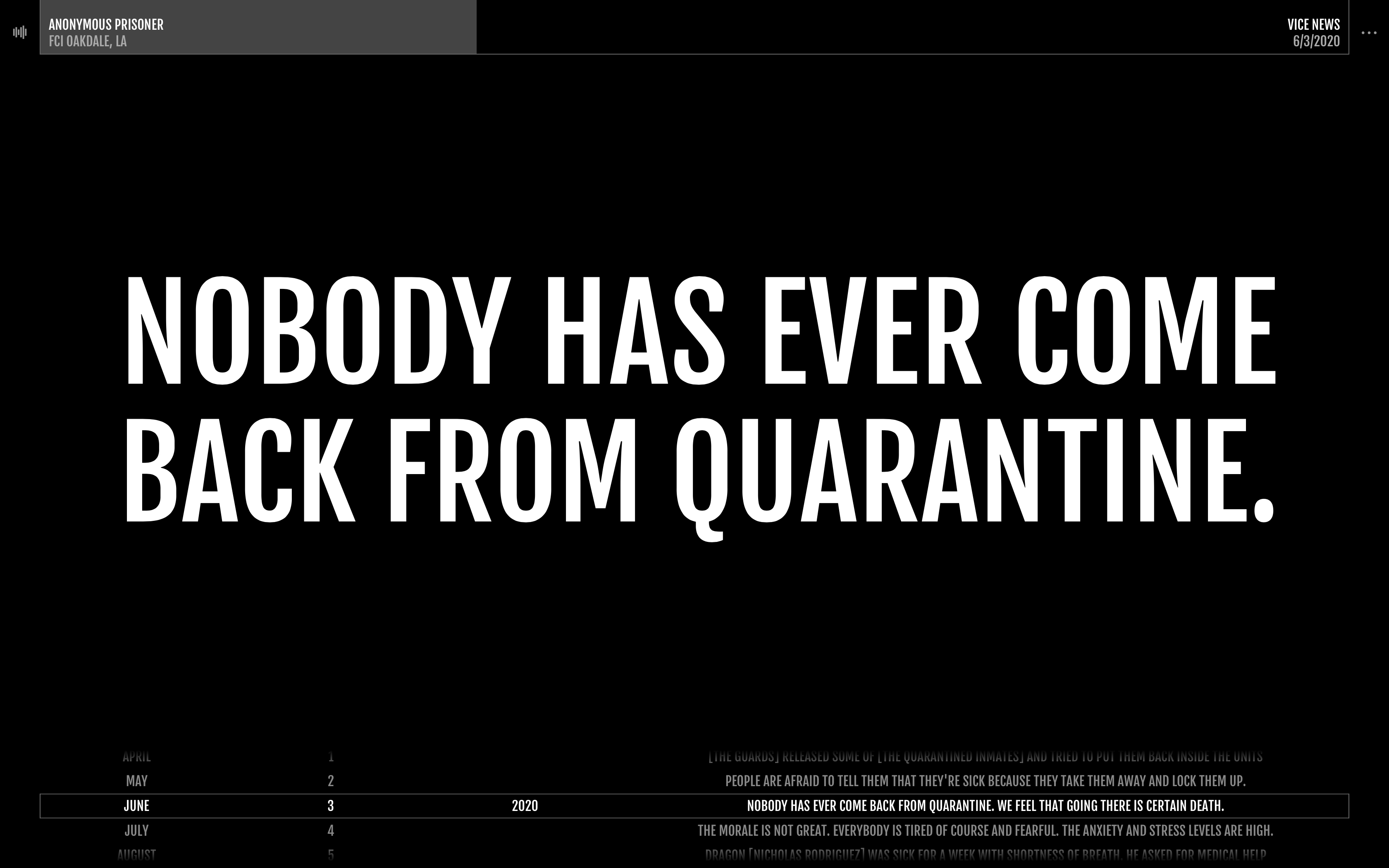
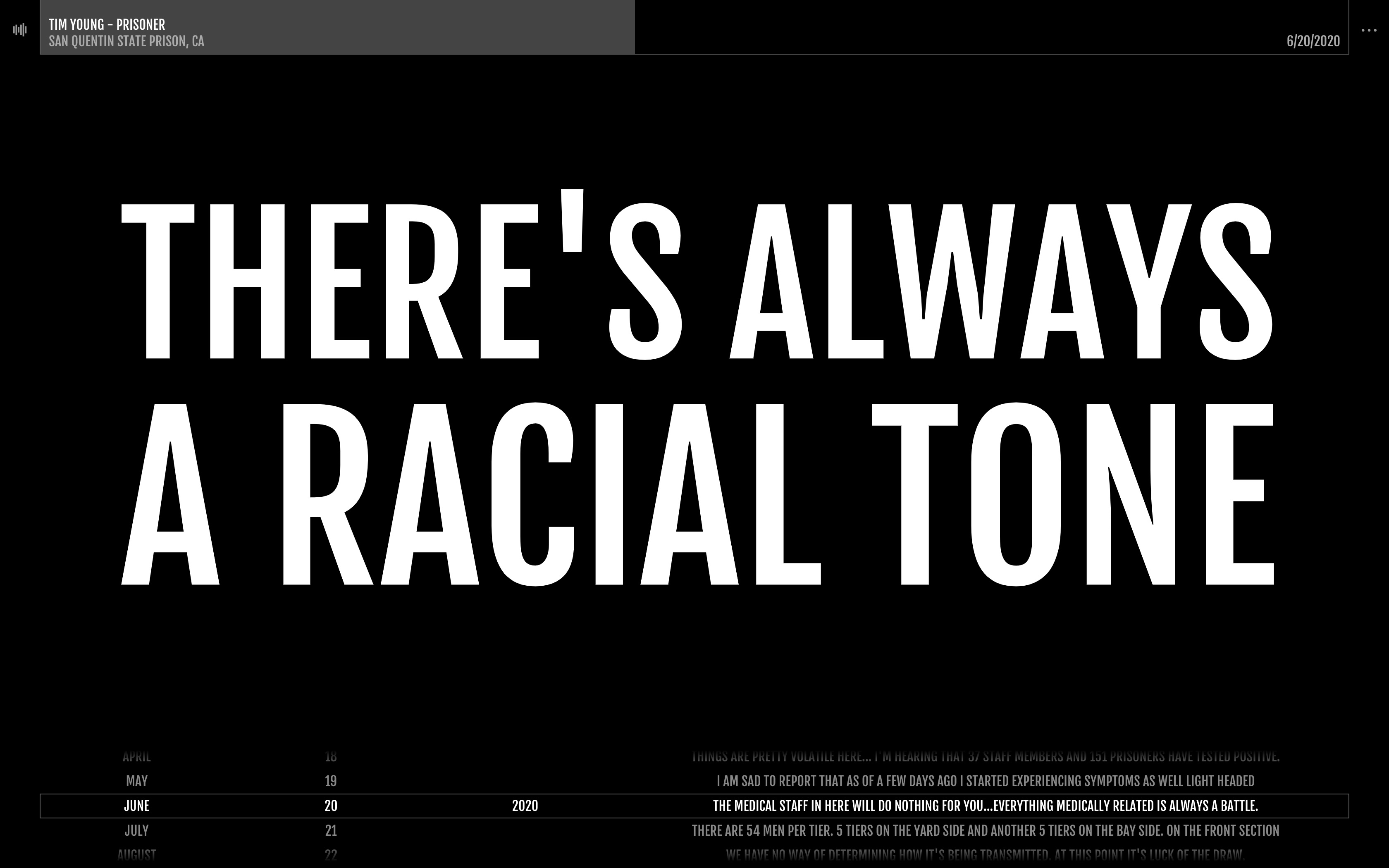
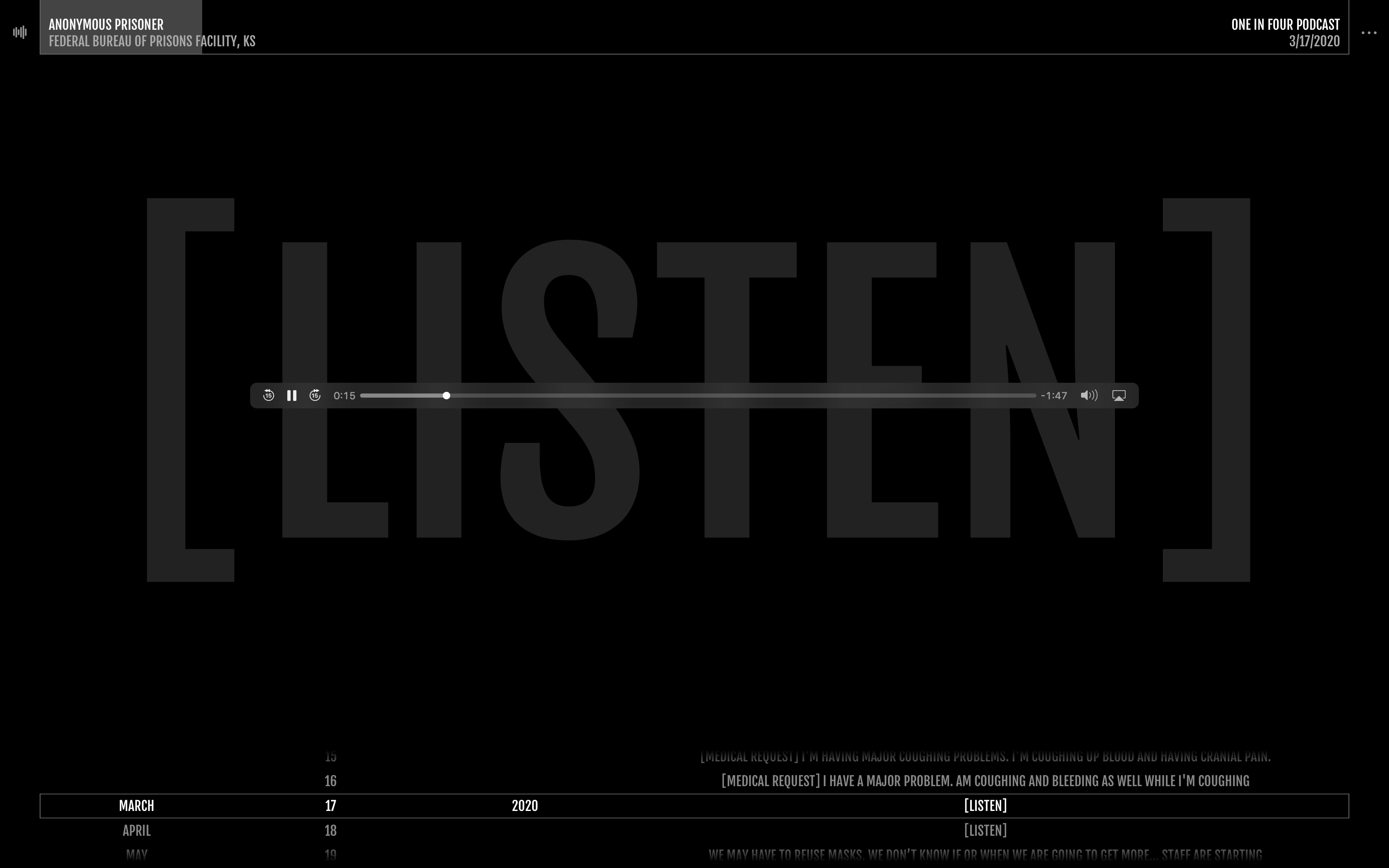
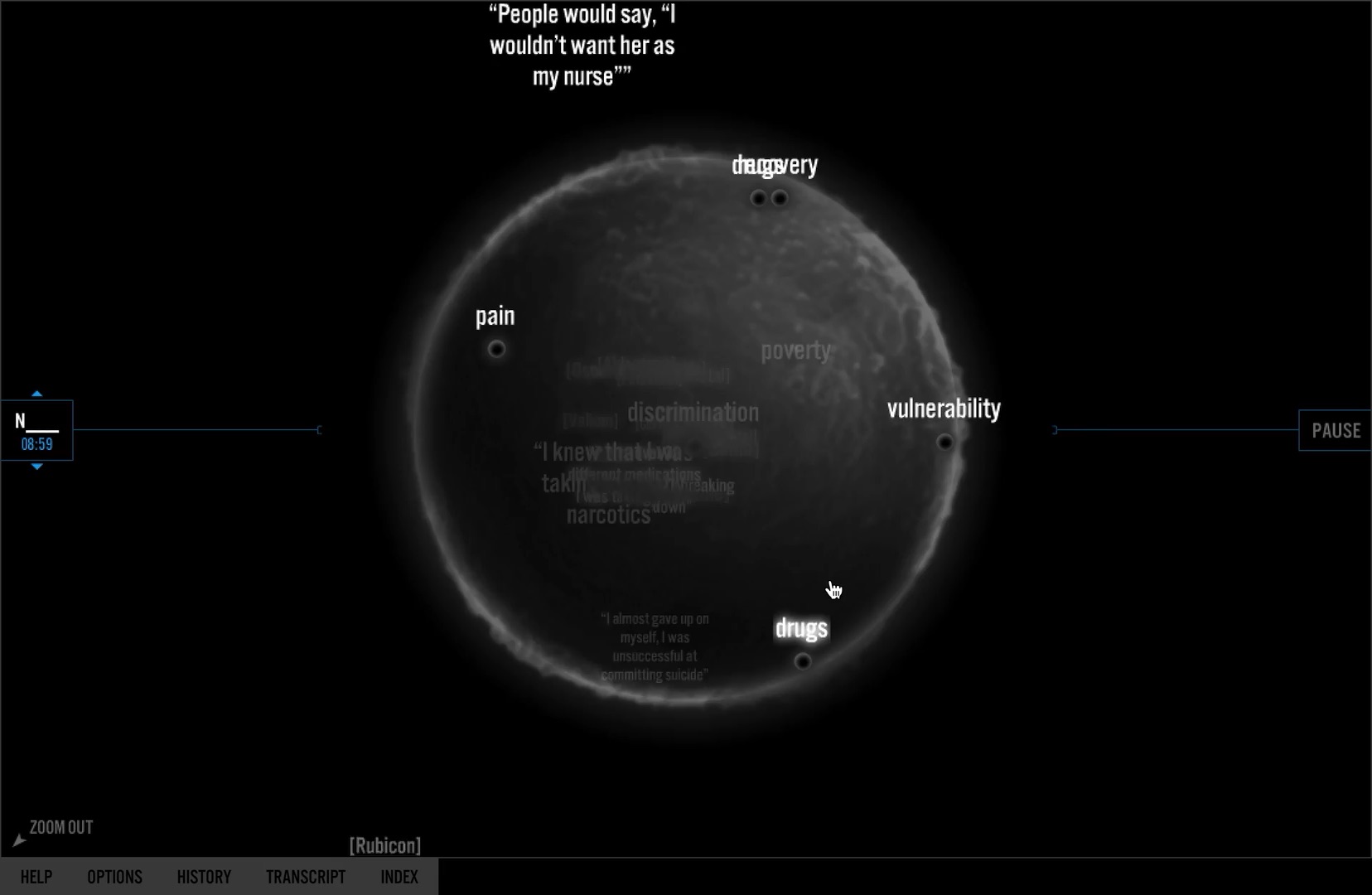
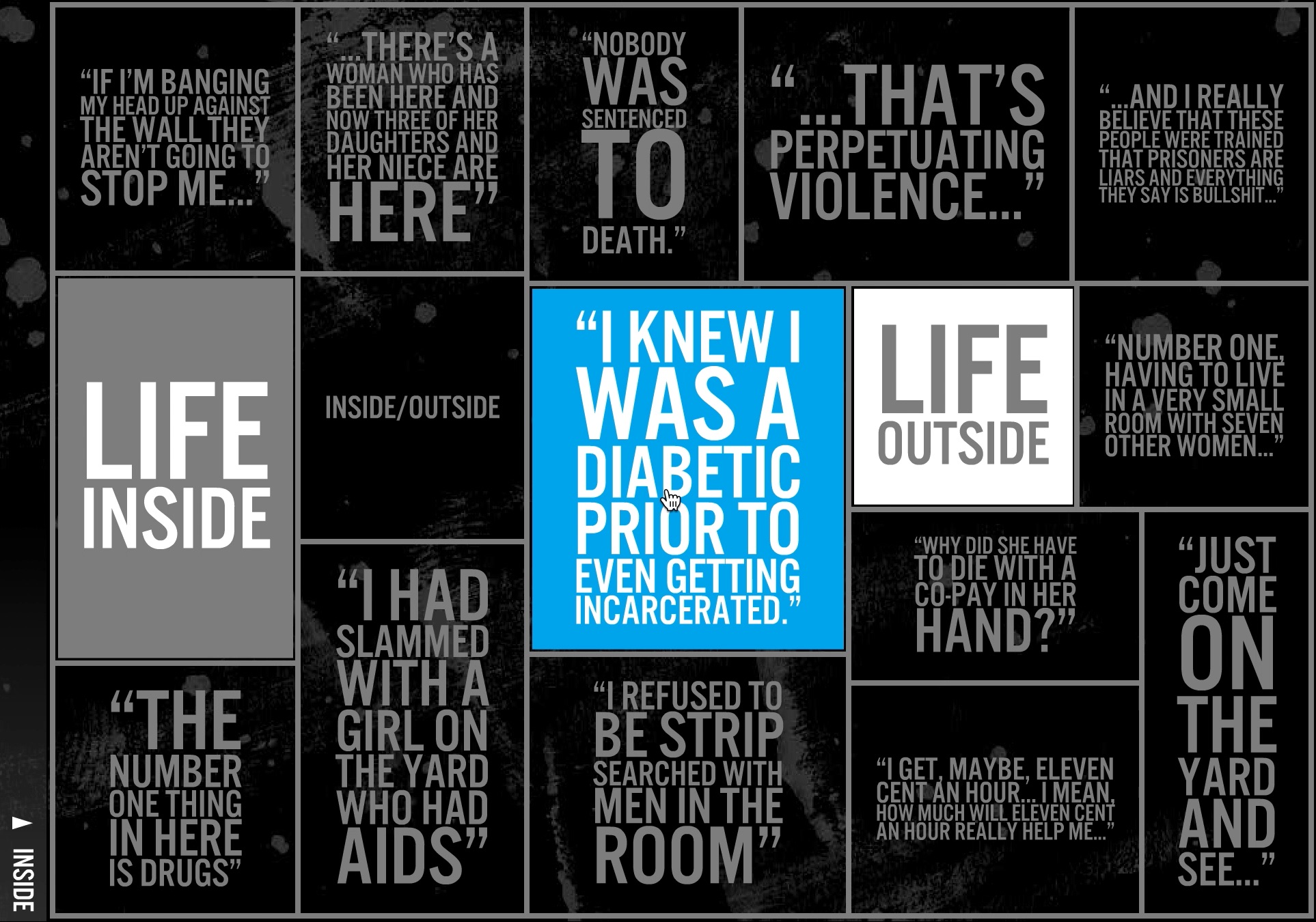
EXPOSED applies dynamically generated typographic treatments and performative interaction design to the words of prisoners, detainees, and their families, in order to make the effects of the catastrophic spread of COVID-19 in prisons more accessible to the general public. This approach is accomplished using an updated version of Slabtype, the algorithm originally developed for Daniel and Loyer's <em>Public Secrets</em>, and is delivered using Stepworks, Loyer's emerging platform for creating "story instruments". The project includes statistics on the spread of the pandemic from a variety of news sources, all attributed with outbound links. Audio material allows users to hear from prisoners and their advocates in their own words. Dynamic sound design integrates both musical and non-musical sounds, and is especially effective when the piece is run in auto-play mode.

Exposed

Image from Timeframing: Temporal Aesthetics in Digital Comics

Timeframing: Temporal Aesthetics in Digital Comics

Image from Upgrade Soul

Upgrade Soul

Image from Stepworks

Stepworks

Image from Panoply

Panoply

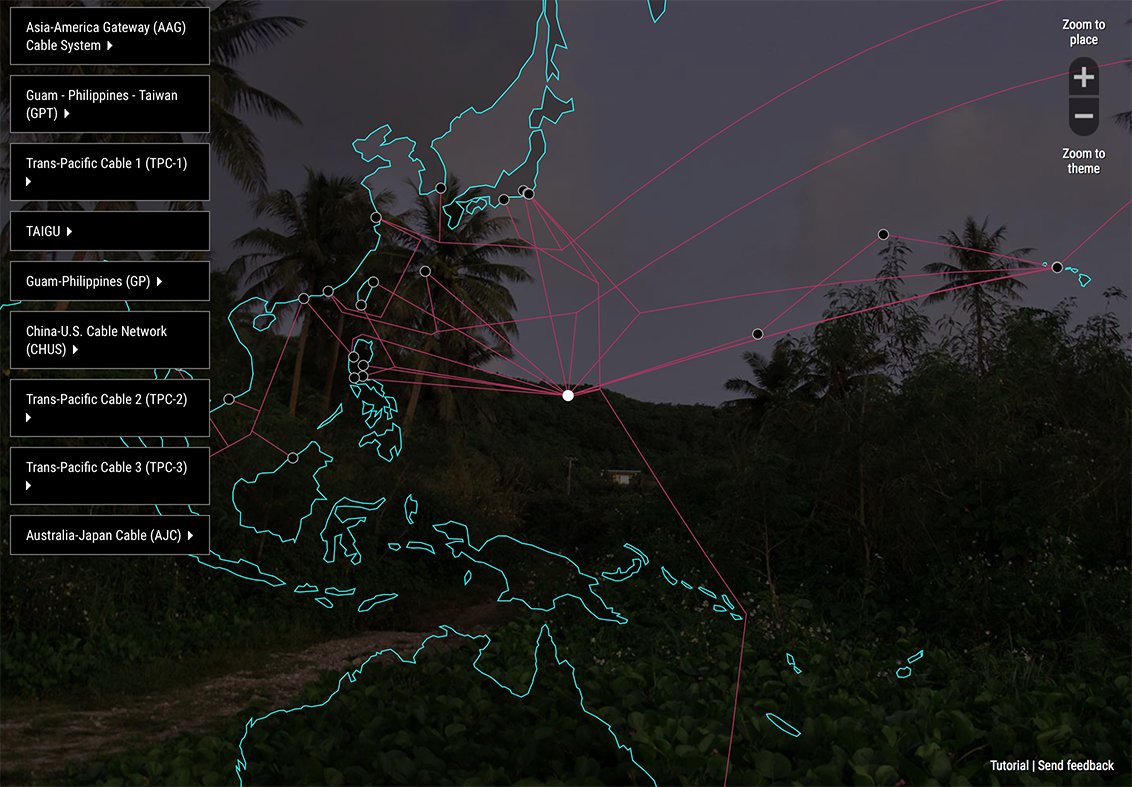
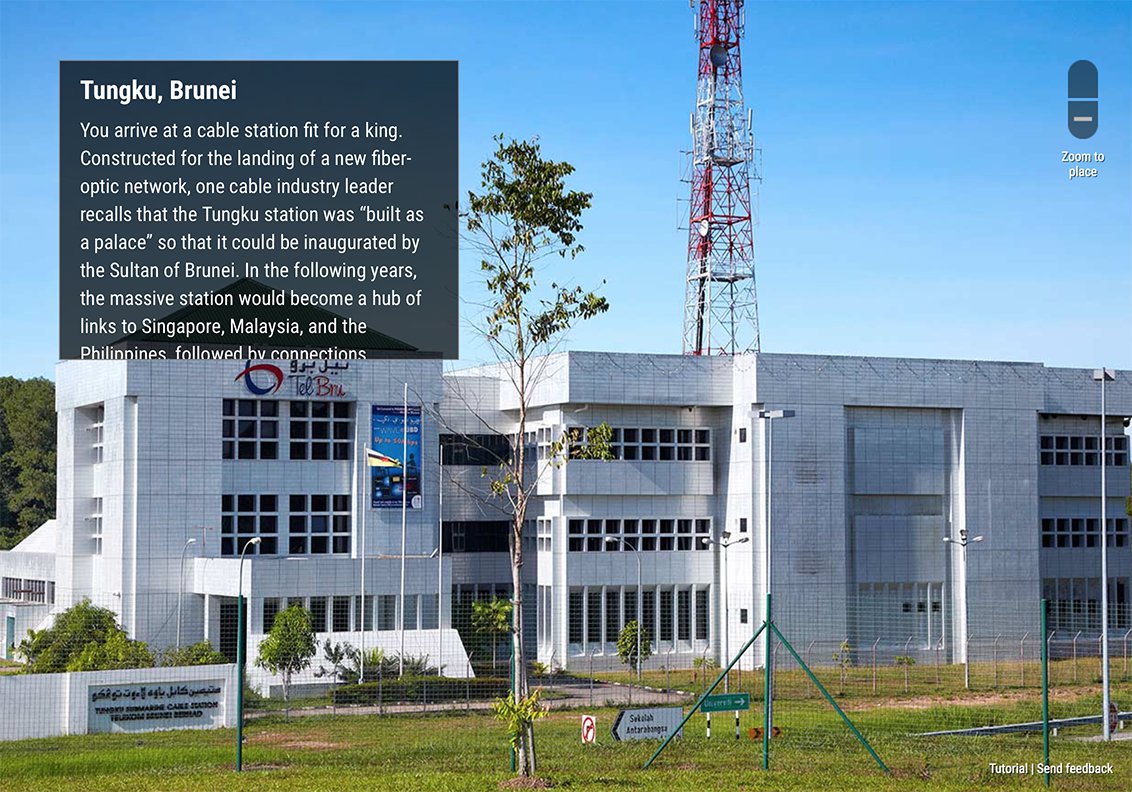
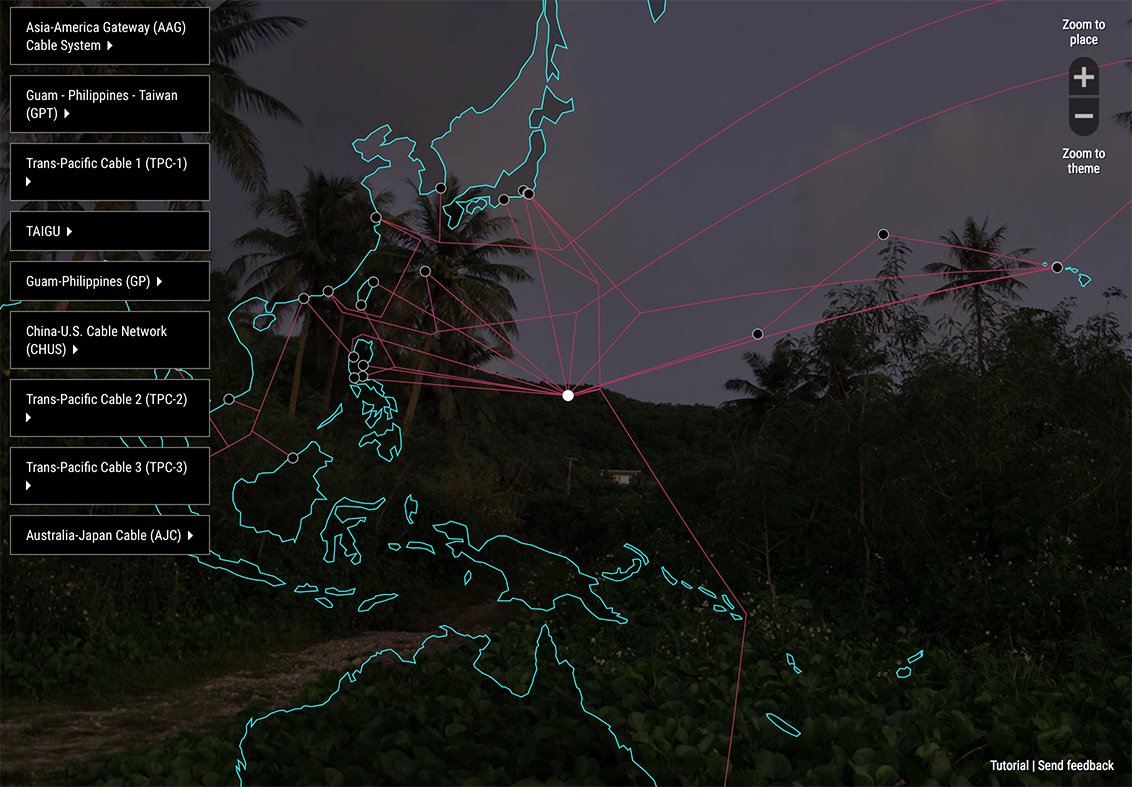
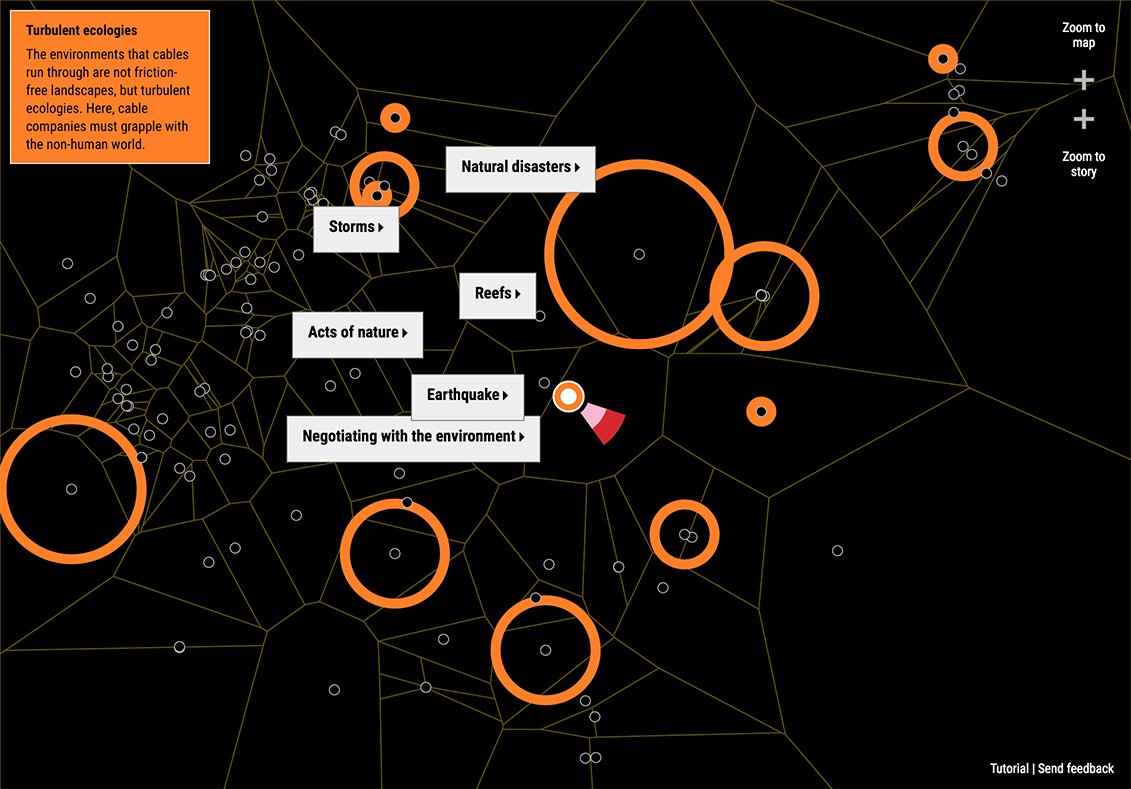
Image from Surfacing The piece begins by dropping the user at a random cable station in the Pacific. From there, users, can zoom out to reveal a draggable map of underwater cable networks… …or even further, to a map of thematic connections between stations which can be expanded and read.

Surfacing

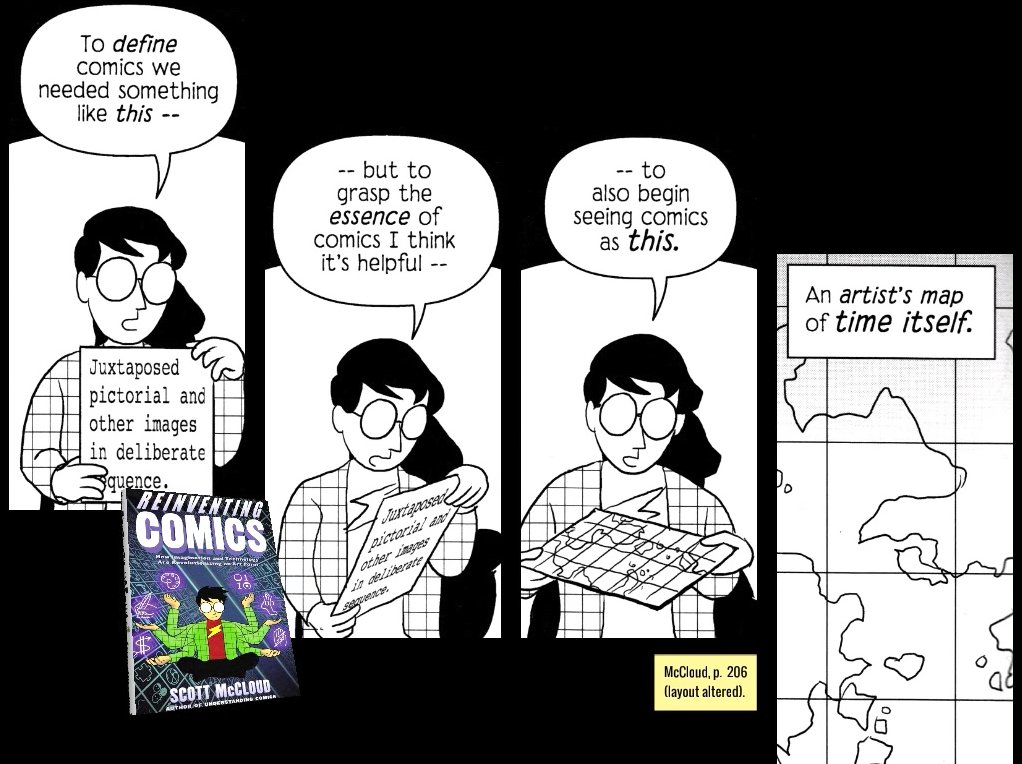
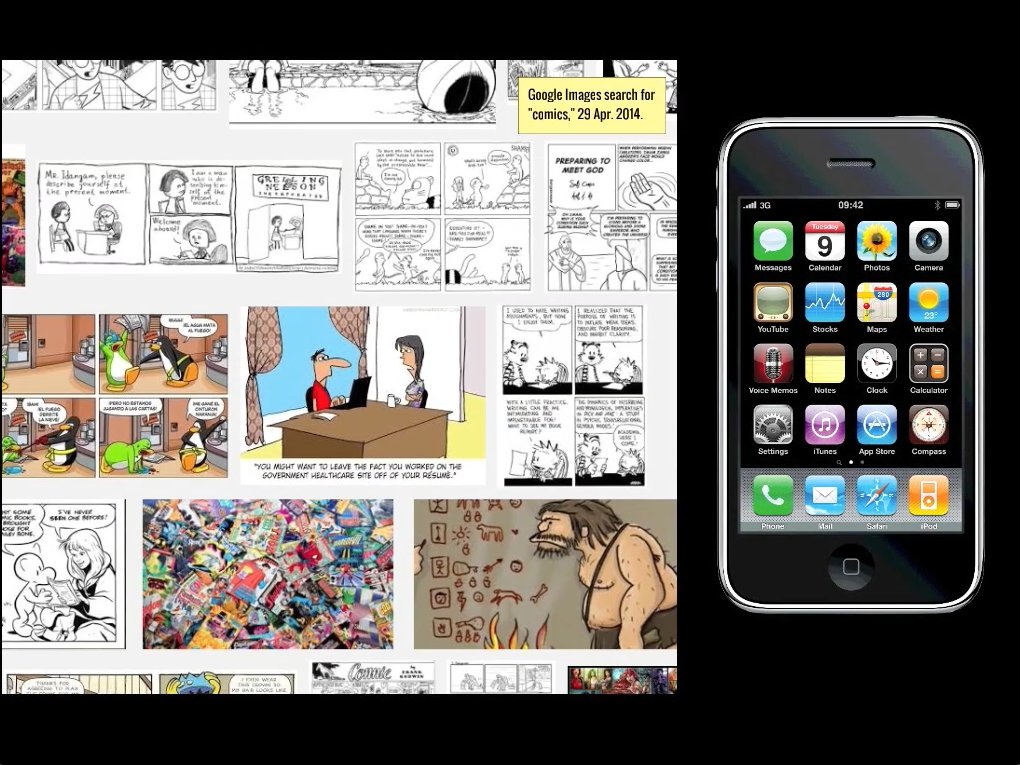
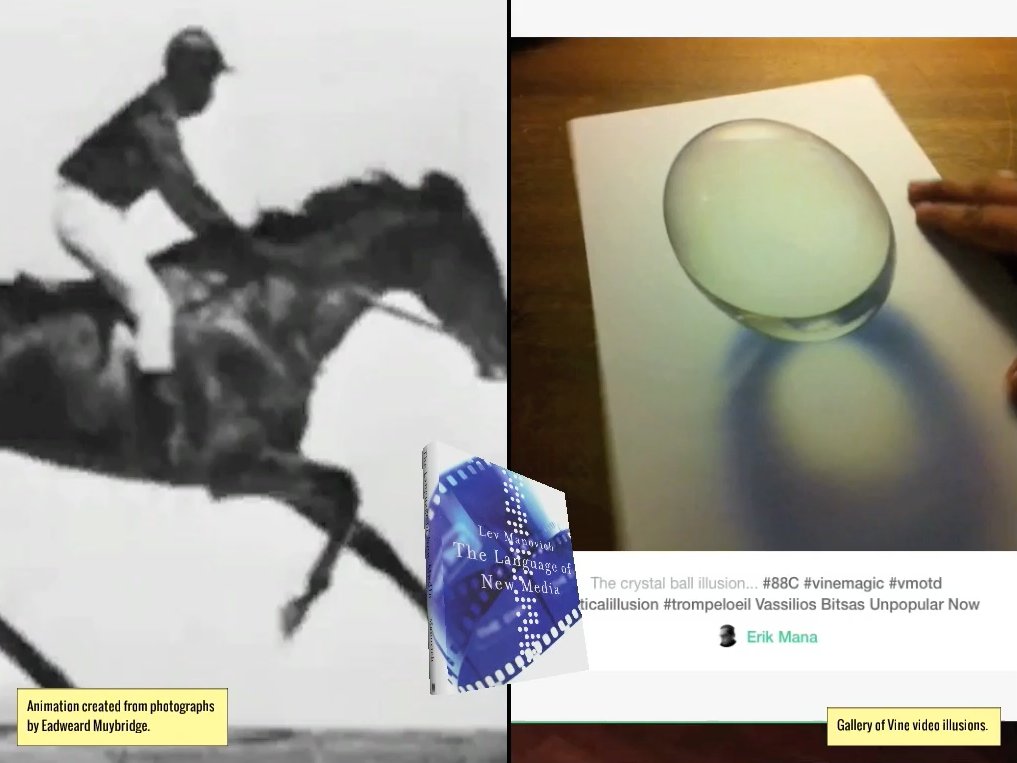
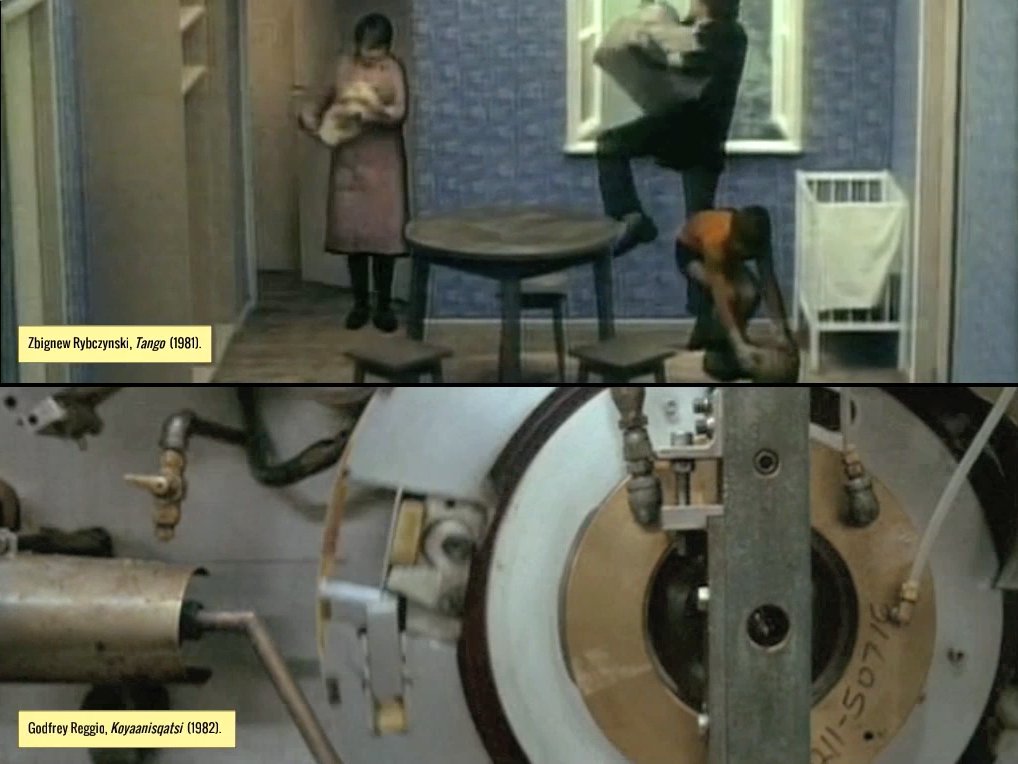
The video examines Scott McCloud’s definition of comics as it relates to screen-based incarnations of the medium. The popularization of momentum scrolling with the iPhone’s touch screen is shown to have a major impact on how screen comics use time. Looping imagery from Muybridge to Vine is a key element in the grammar of screen comics. Examples of looping motion from experimental cinema are cites to place screen comics practice in historical context. The video concludes with a taste of how screen comics might play with time in interesting new ways.

Space Into Game, Time Into Book

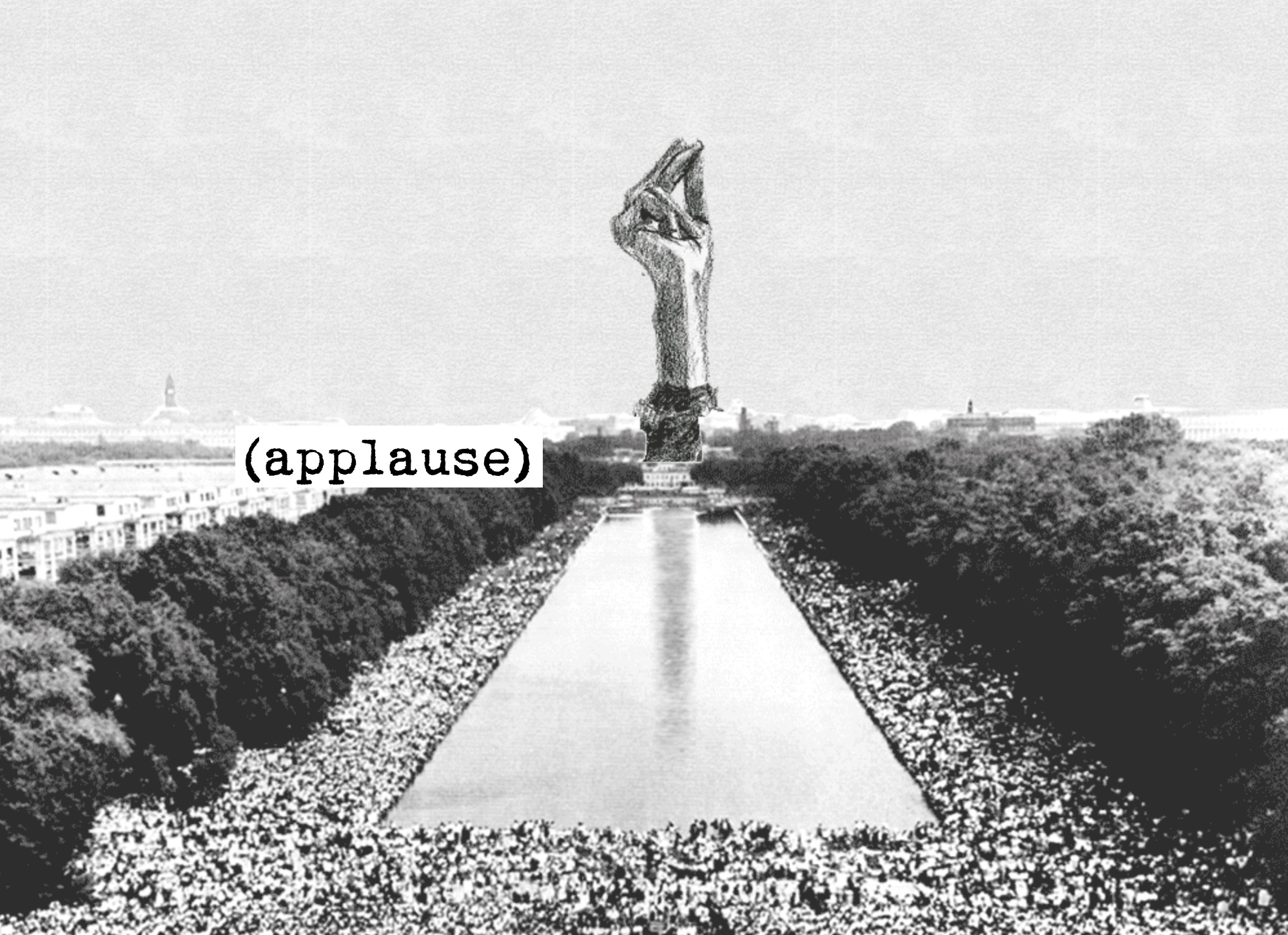
Image from Freedom’s Ring

Freedom’s Ring

Image from Breathing Room

Breathing Room

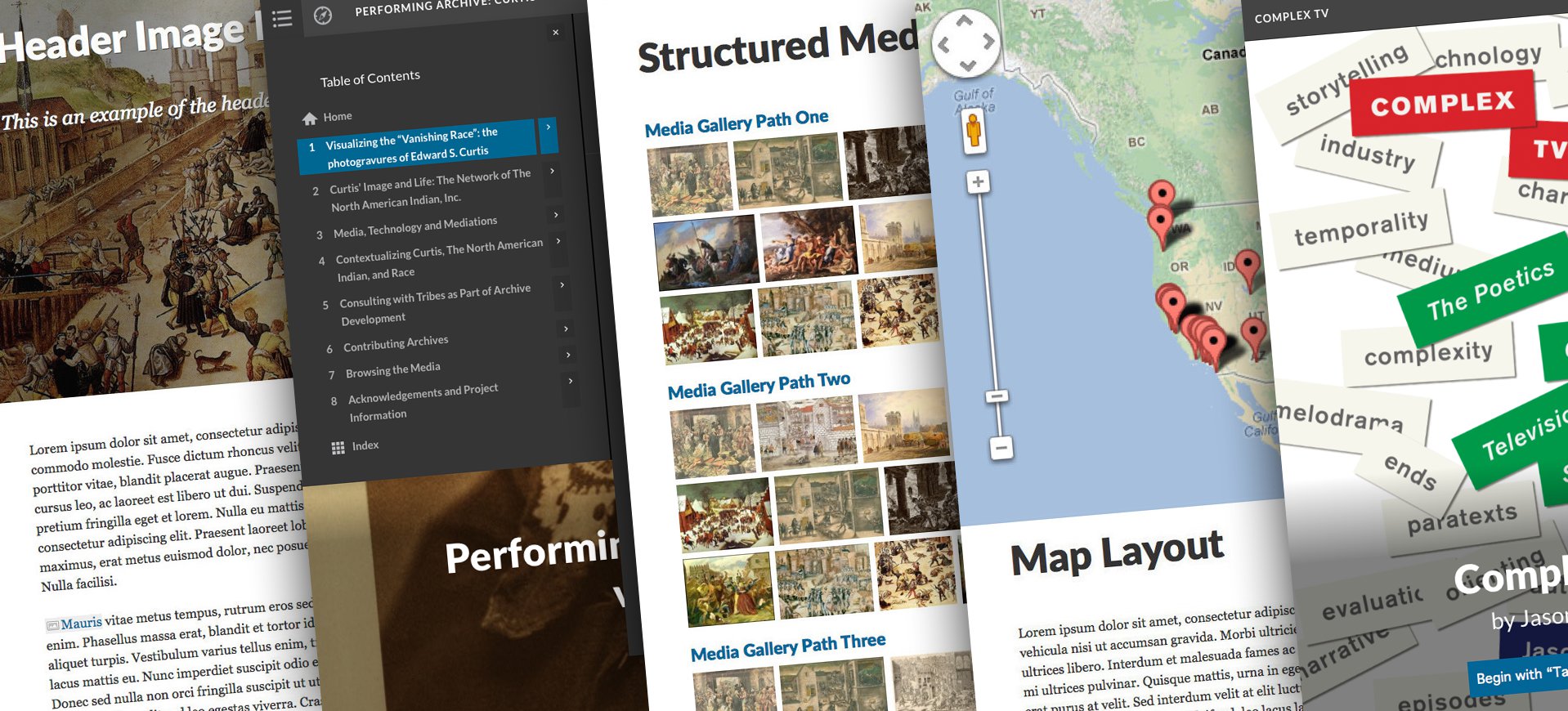
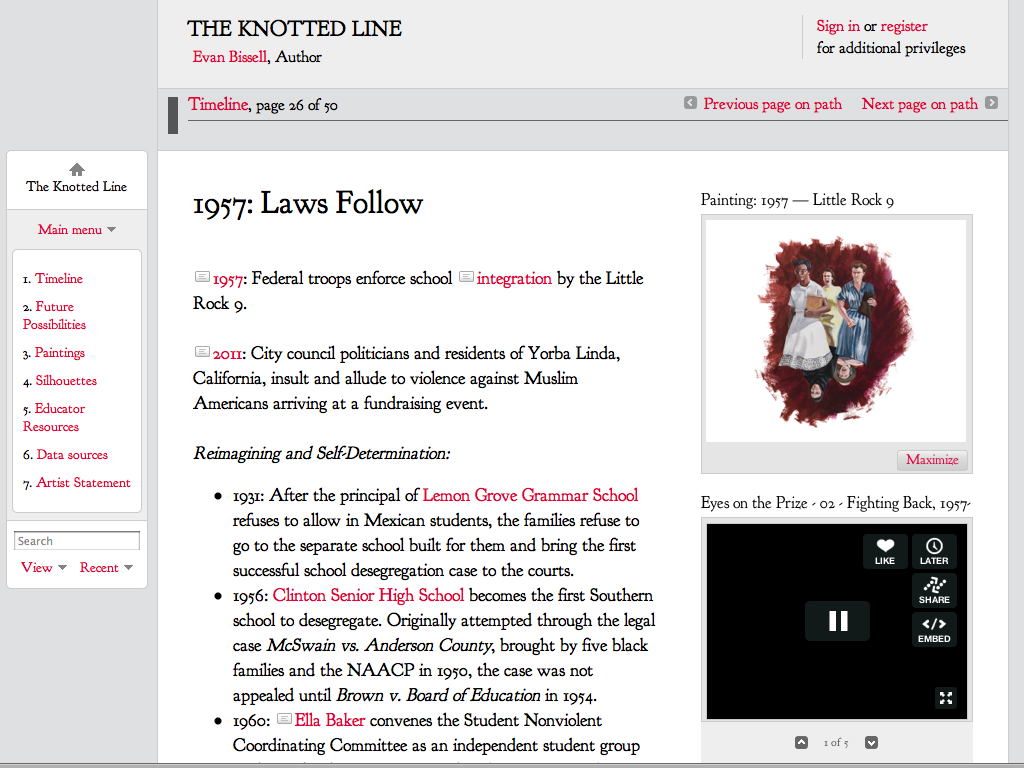
A variety of layouts give Scalar authors ample options for displaying content and media. A recent interface redesign gives Scalar books greater visual impact while making them easier to read, navigate, and edit. Scalar’s built-in visualizations enable authors and readers to see structures and patterns that might otherwise remain hidden. Scalar is flexible enough to support a wide variety of applications, including this choose-your-own-adventure-style game that makes extensive use of video. Scalar’s API allows completely new interfaces to be powered by content authored using the platform, as in projects like The Knotted Line and Freedom’s Ring.

Scalar

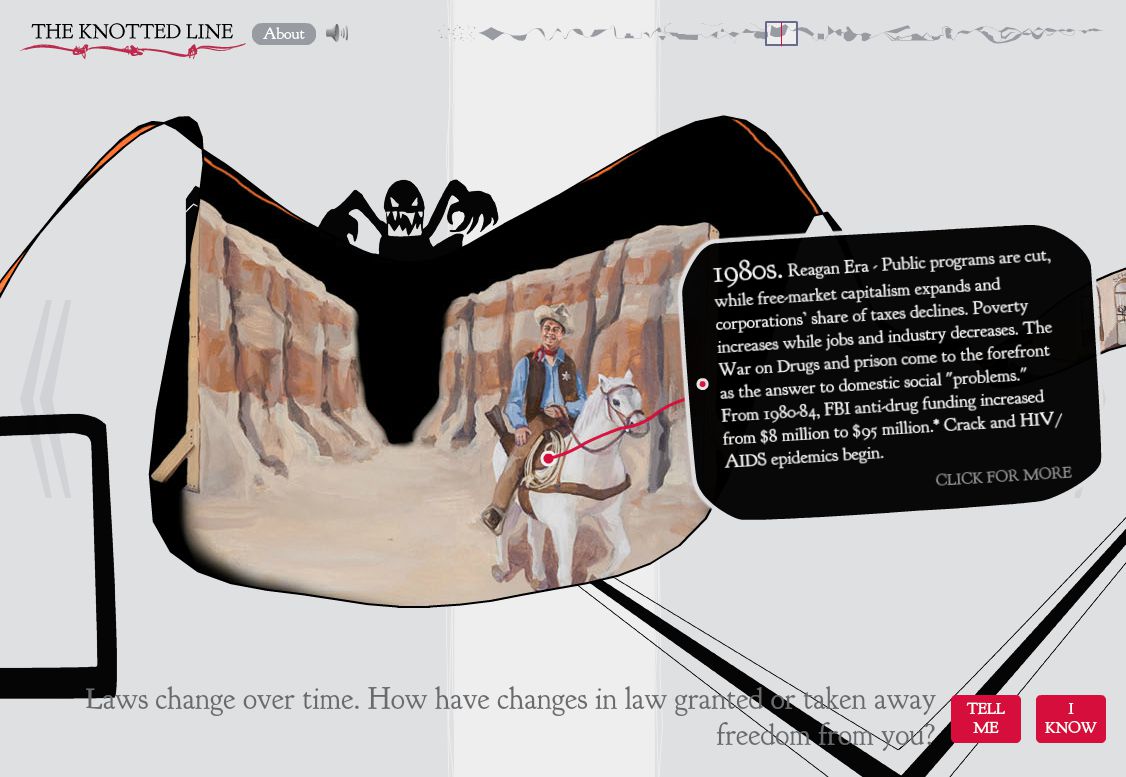
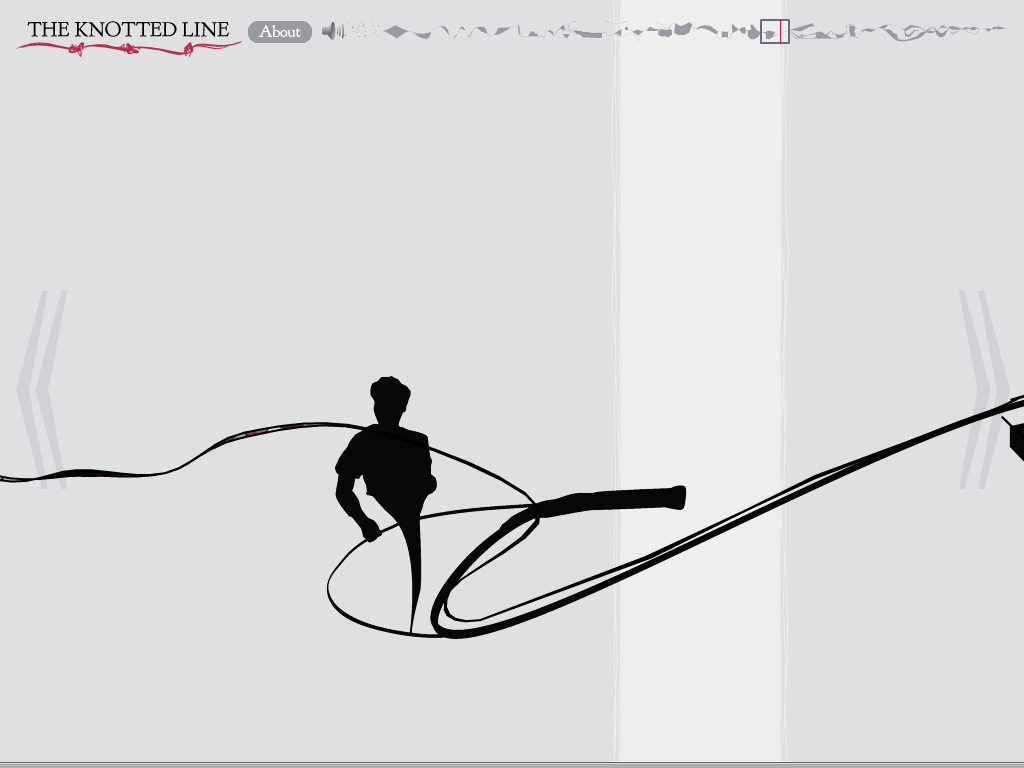
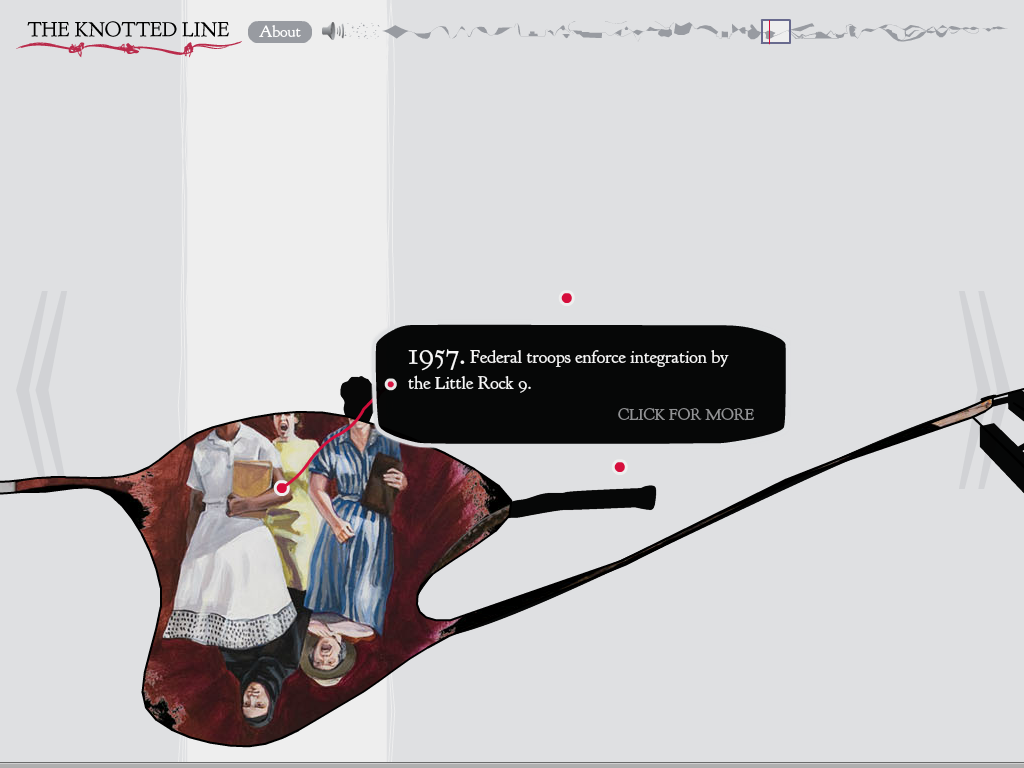
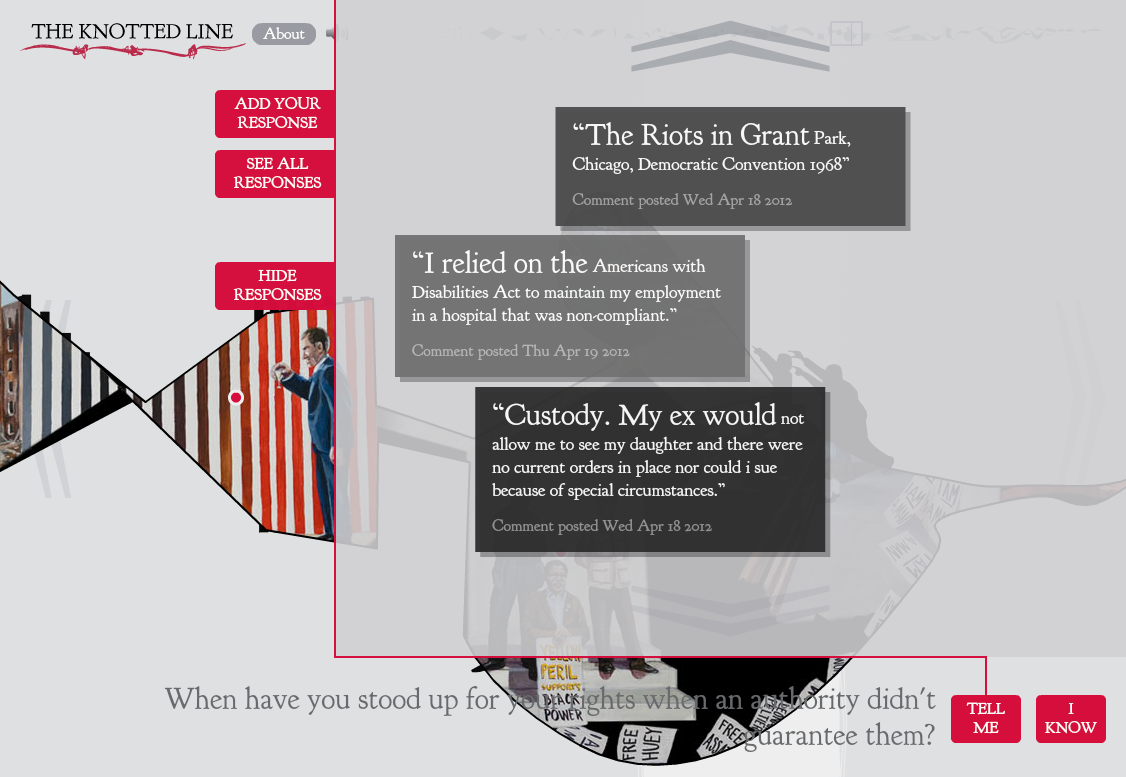
The project opens, and a wavy line connecting enigmatic silhouettes appears. As the user moves the cursor over the line, it undulates in response before splitting open to reveal Evan Bissell’s painting, adding another layer of meaning to the silhouette while also introducing the historical moment being depicted. Across the 25,000 pixel wide timeline, a spectrum of visuals and historical events are available to be explored. Users can add their own comments in response to questions posed by the interface. The publishing platform Scalar is used to deliver the content and data that drives the tactile experience, and Scalar’s own interface serves as the vehicle for additional educational resources surrounding each historical moment.

The Knotted Line

Image from Languish

Languish

Image from Strange Rain

Strange Rain

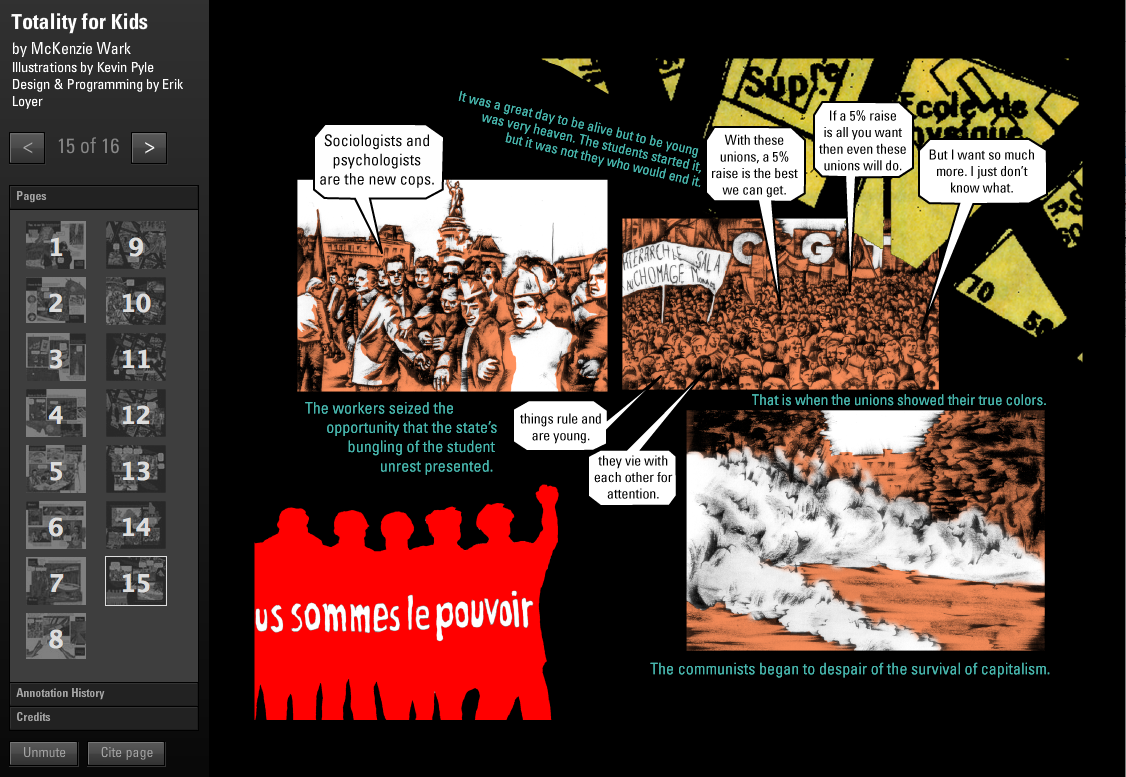
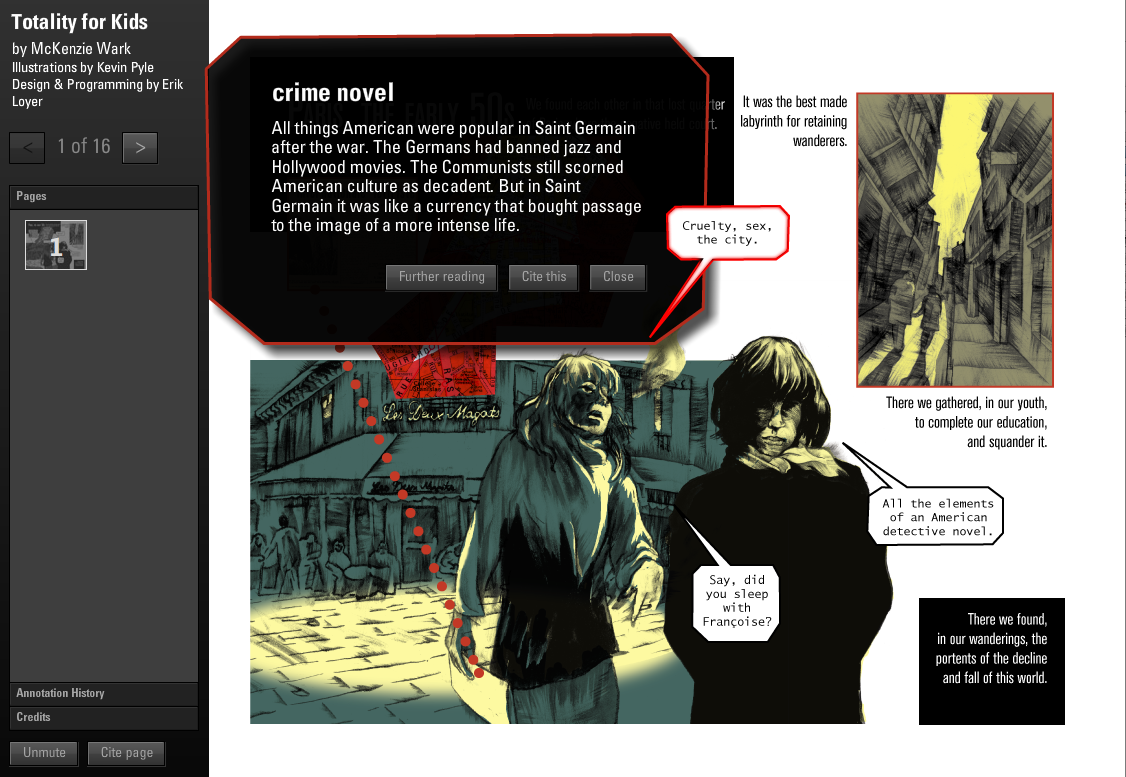
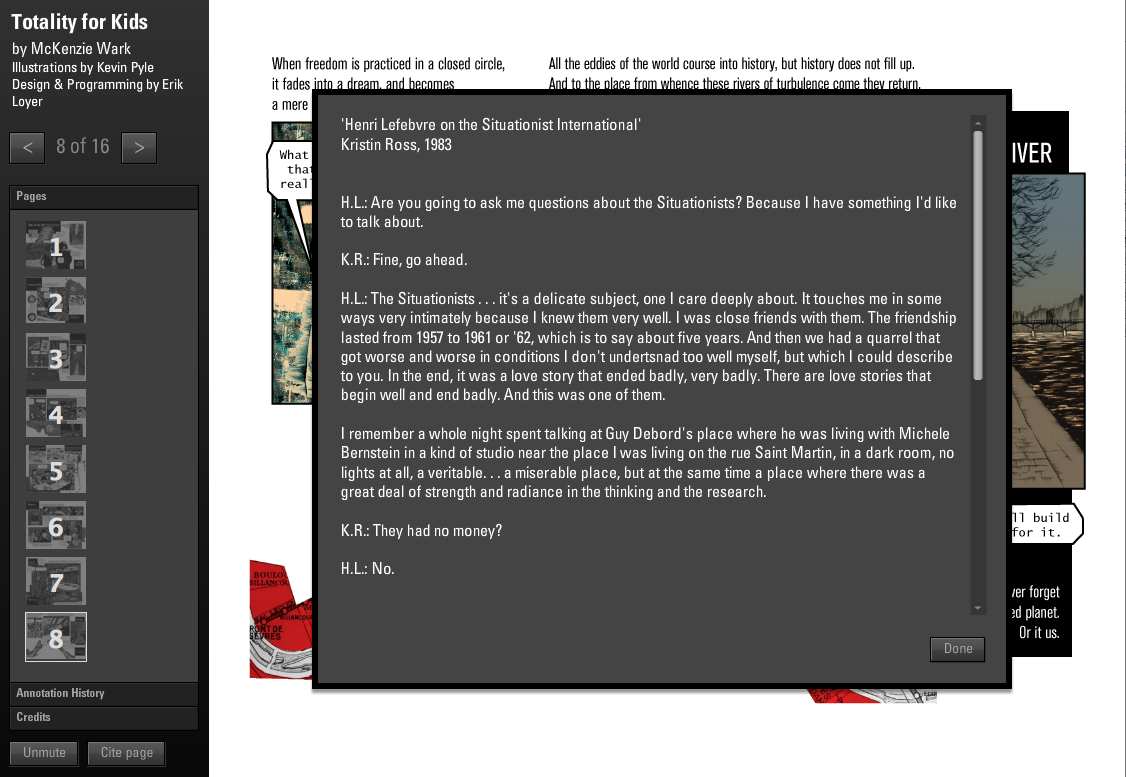
The comic recounts the emergence of the Situationist International in two sections of eight pages each, accompanied by musical score. Individual visual elements are annotated with historical details.  Specific annotations provide access to excerpts from foundational texts of the movement.

Totality for Kids

Image from Precision Targets

Precision Targets

Image from Blood Sugar

Blood Sugar

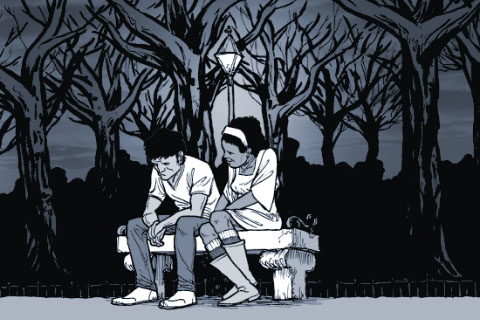
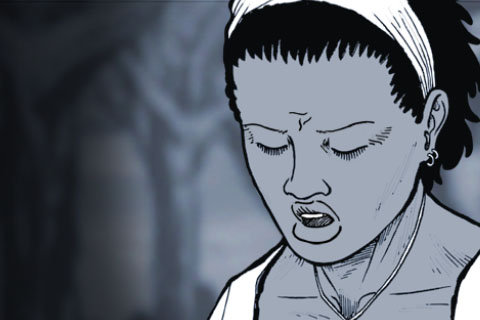
Ruben & Lullaby discuss their relationship. By stroking the screen, the user can calm the characters down. Shaking the device makes characters more angry. A dynamic jazz soundtrack responds to the user’s actions. The user can try to break up the couple, keep them together, or just enjoy the music of their circumstances.

Ruben & Lullaby

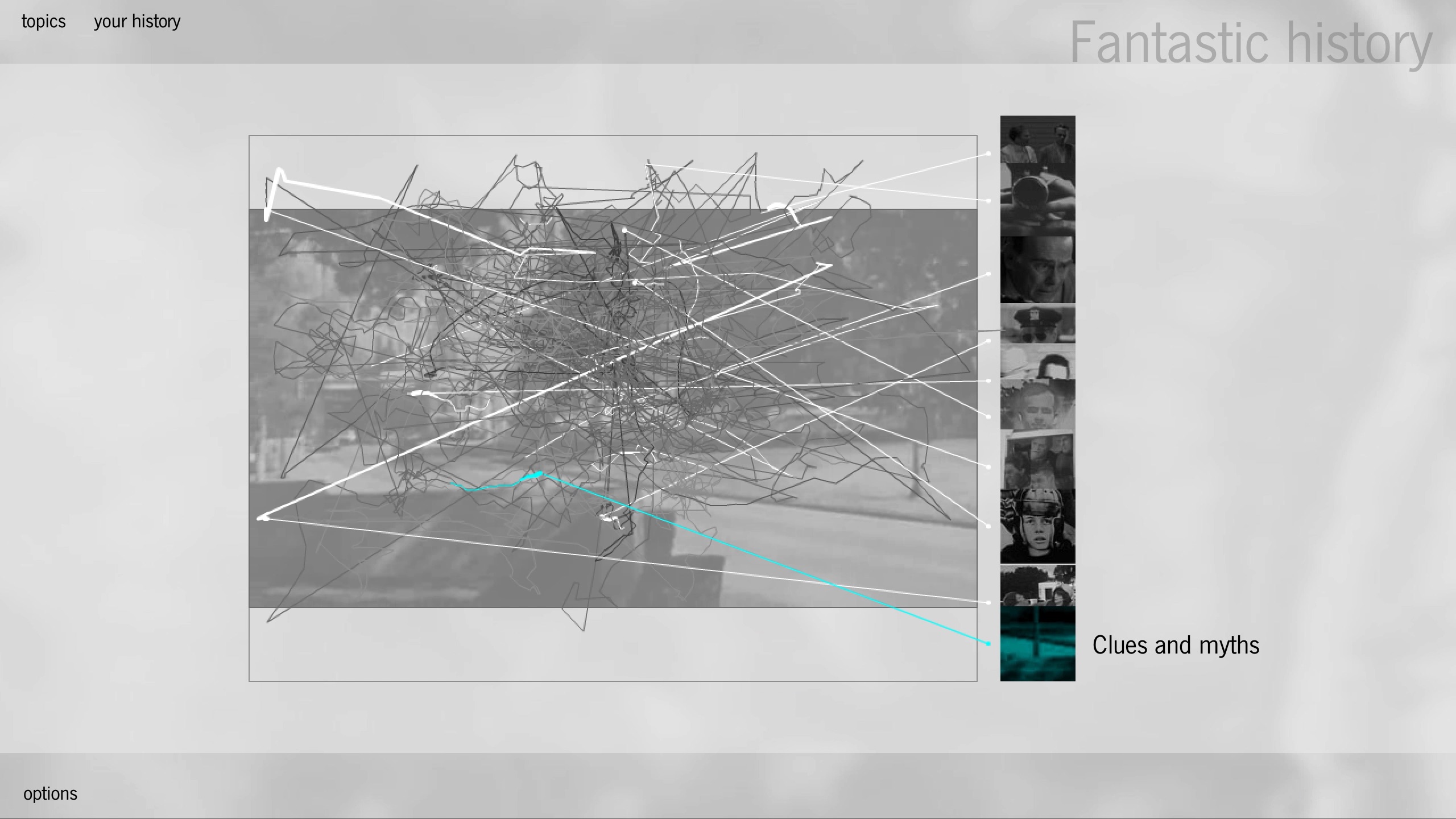
Image from Technologies of History

Technologies of History

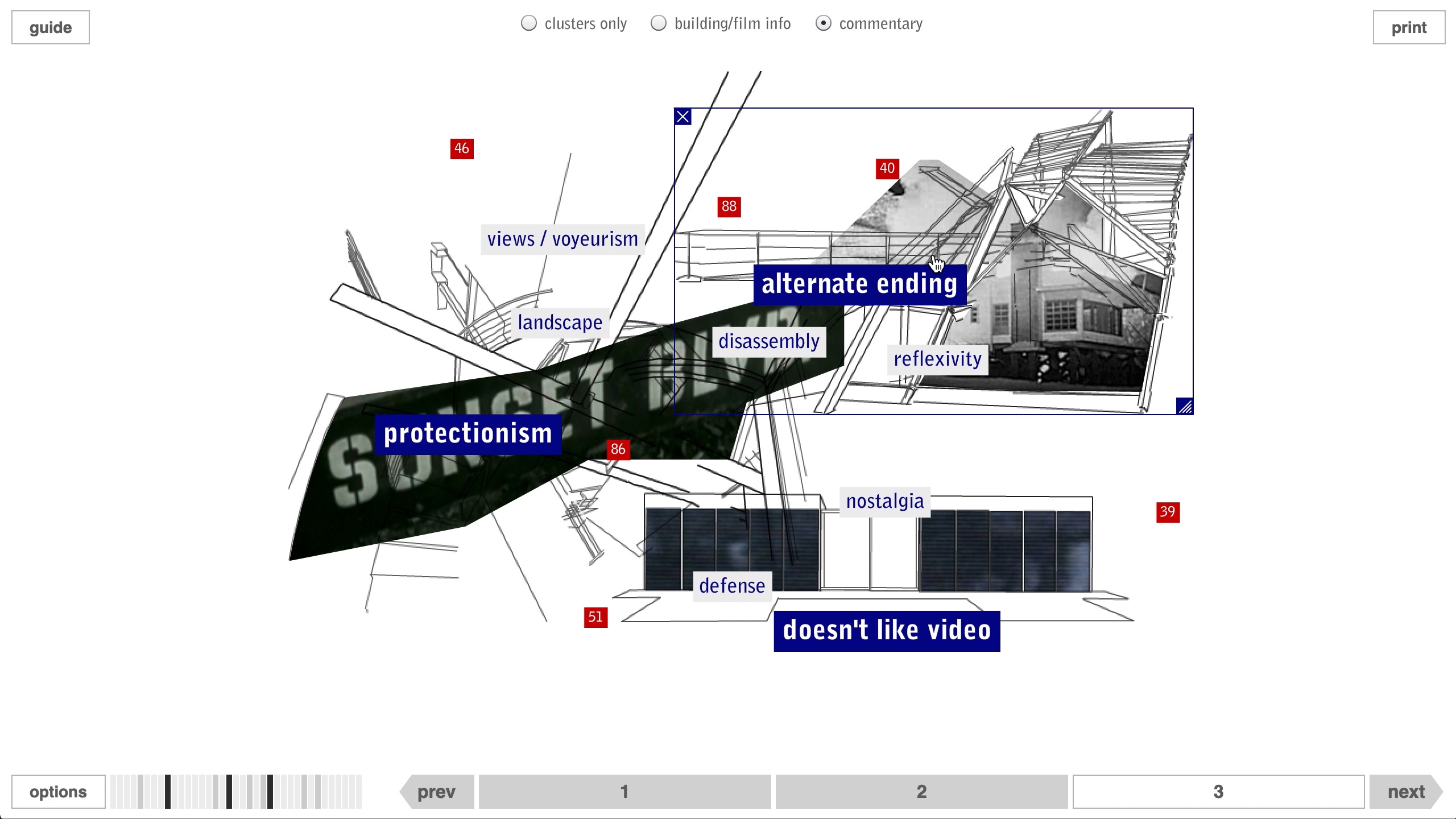
Image from Critical Sections

Critical Sections

Image from Blue Velvet

Blue Velvet

Image from Nation on the Move

Nation on the Move

Image from Swing

Swing

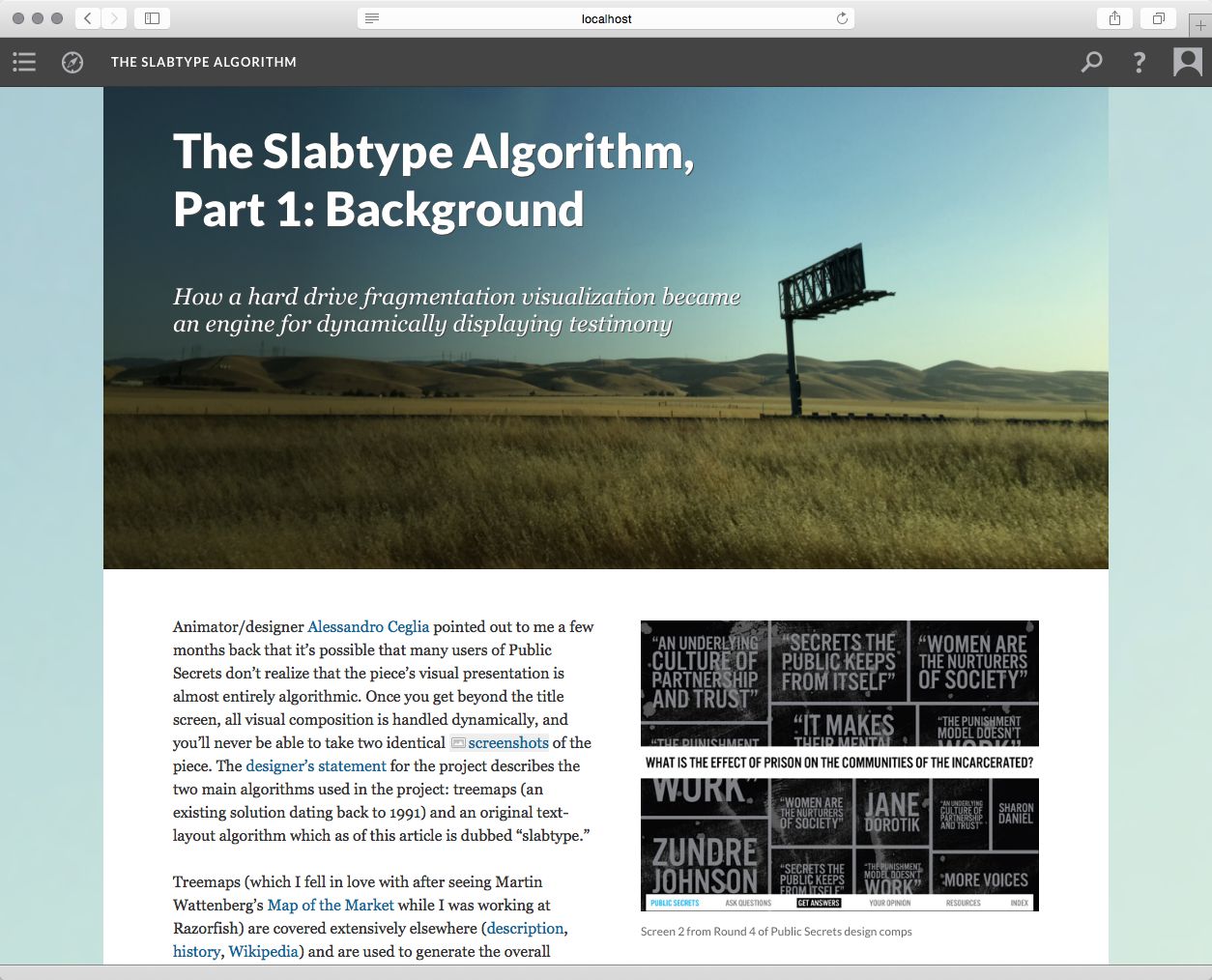
Image from Slabtype Algorithm The algorithm transforms arbitrary text input into a rectangular “slab” of text designed to fit in a specified rectangle. Slabtype was originally designed for the interface of the interactive documentary Public Secrets.

Slabtype Algorithm

Image from Public Secrets

Public Secrets

Image from The Virtual Window Interactive

The Virtual Window Interactive

Image from Cast-offs from the Golden Age

Cast-offs from the Golden Age

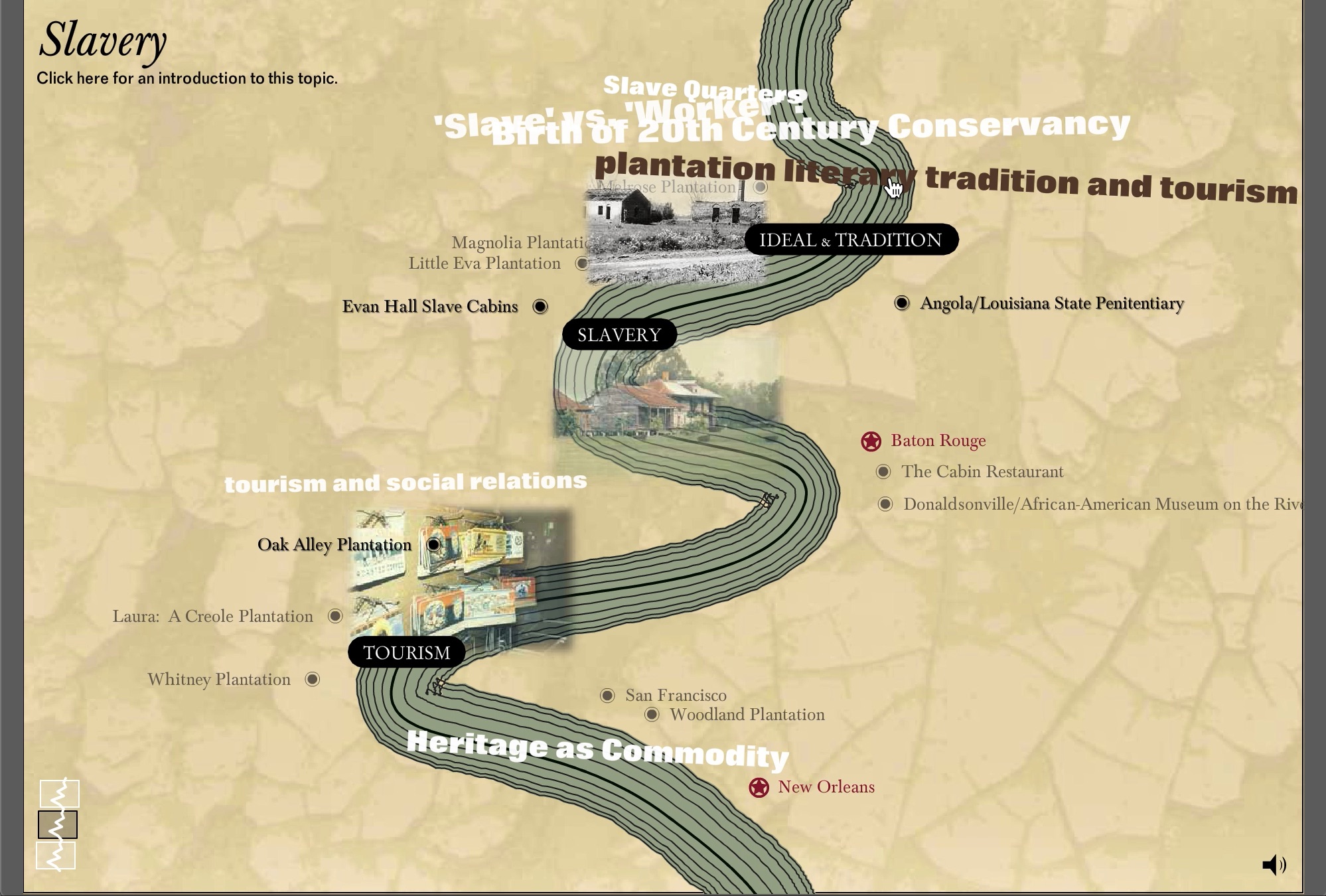
Image from Slavery’s Ephemera

Slavery’s Ephemera

Image from Mobile Figures

Mobile Figures

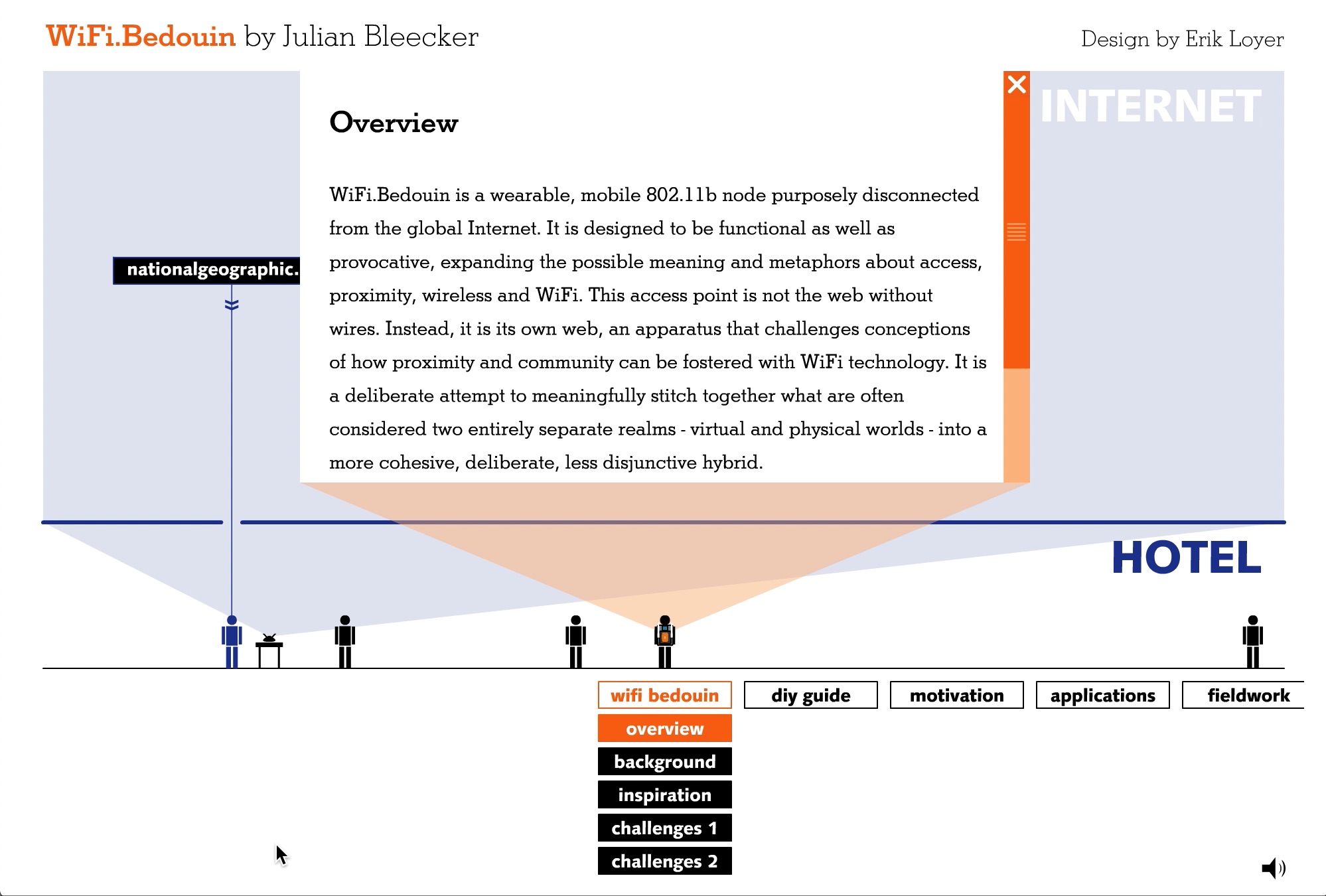
Image from WiFi.Bedouin

WiFi.Bedouin

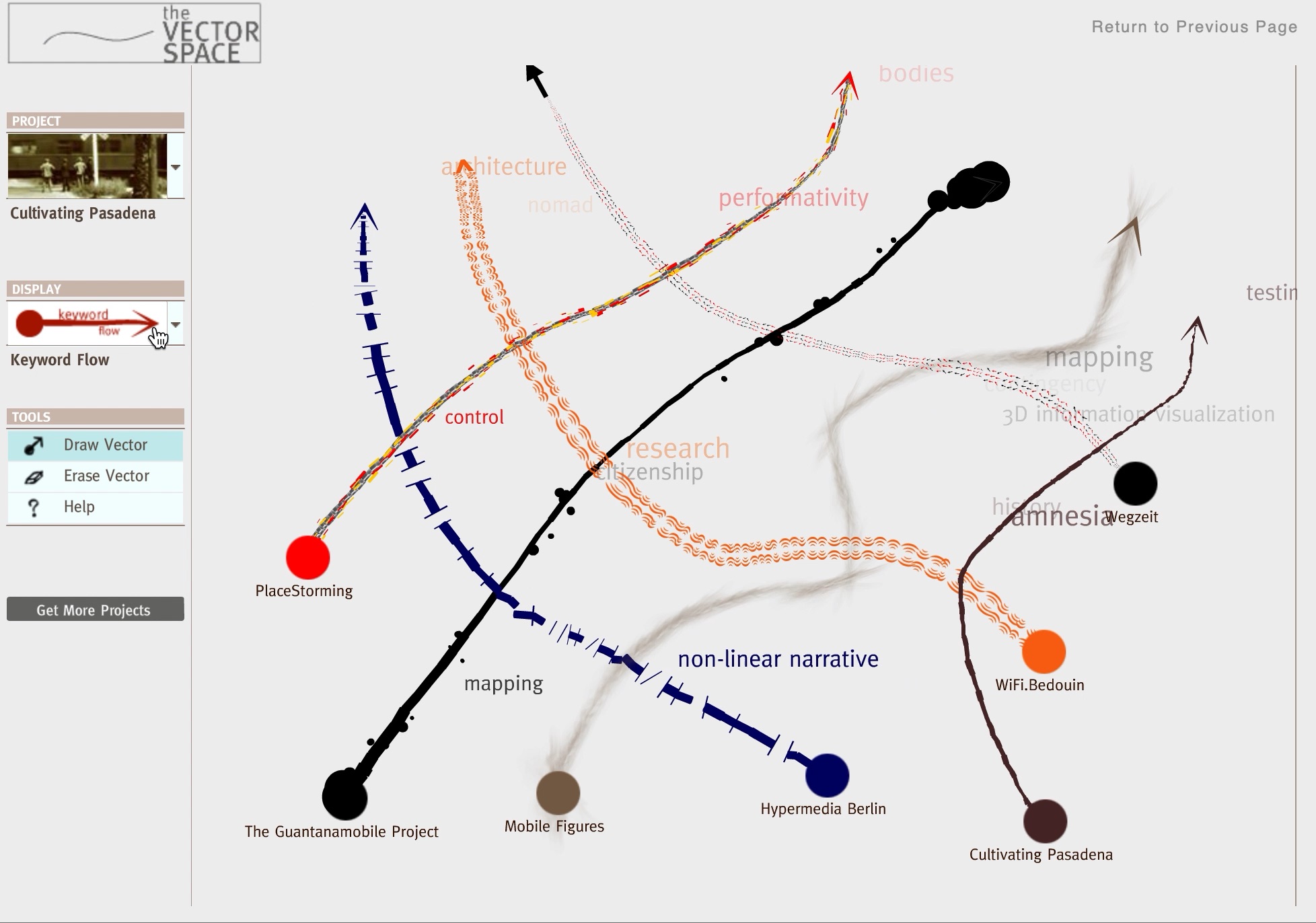
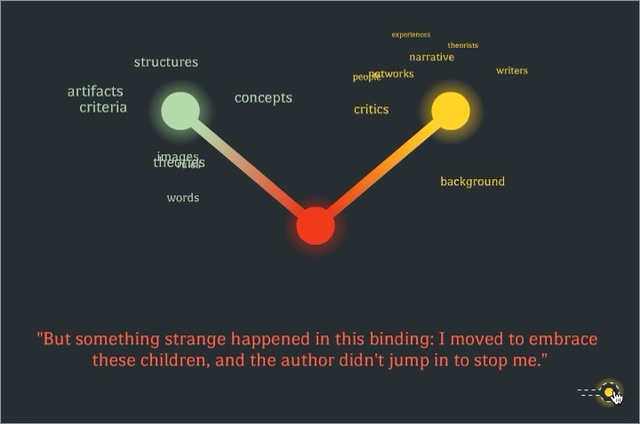
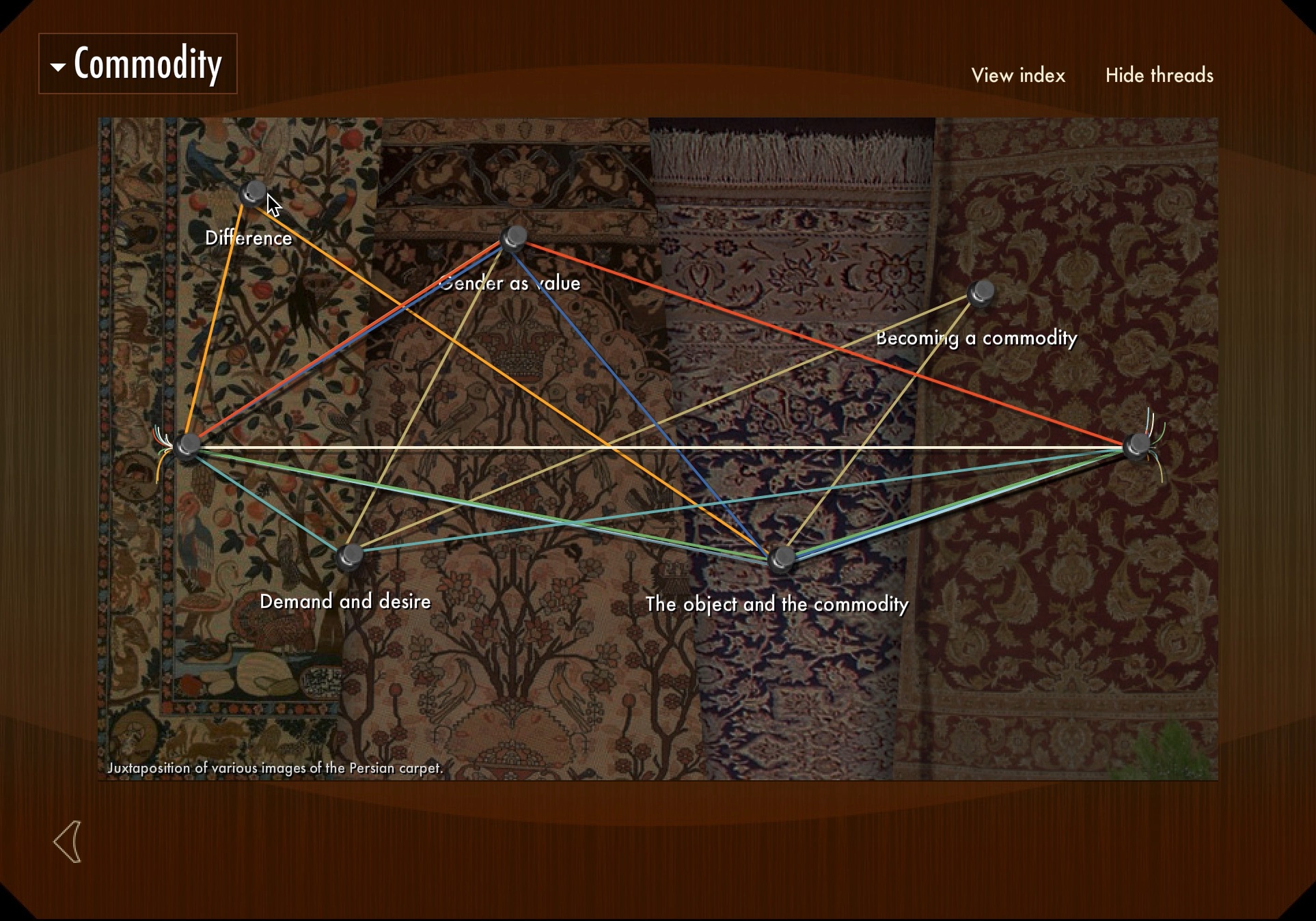
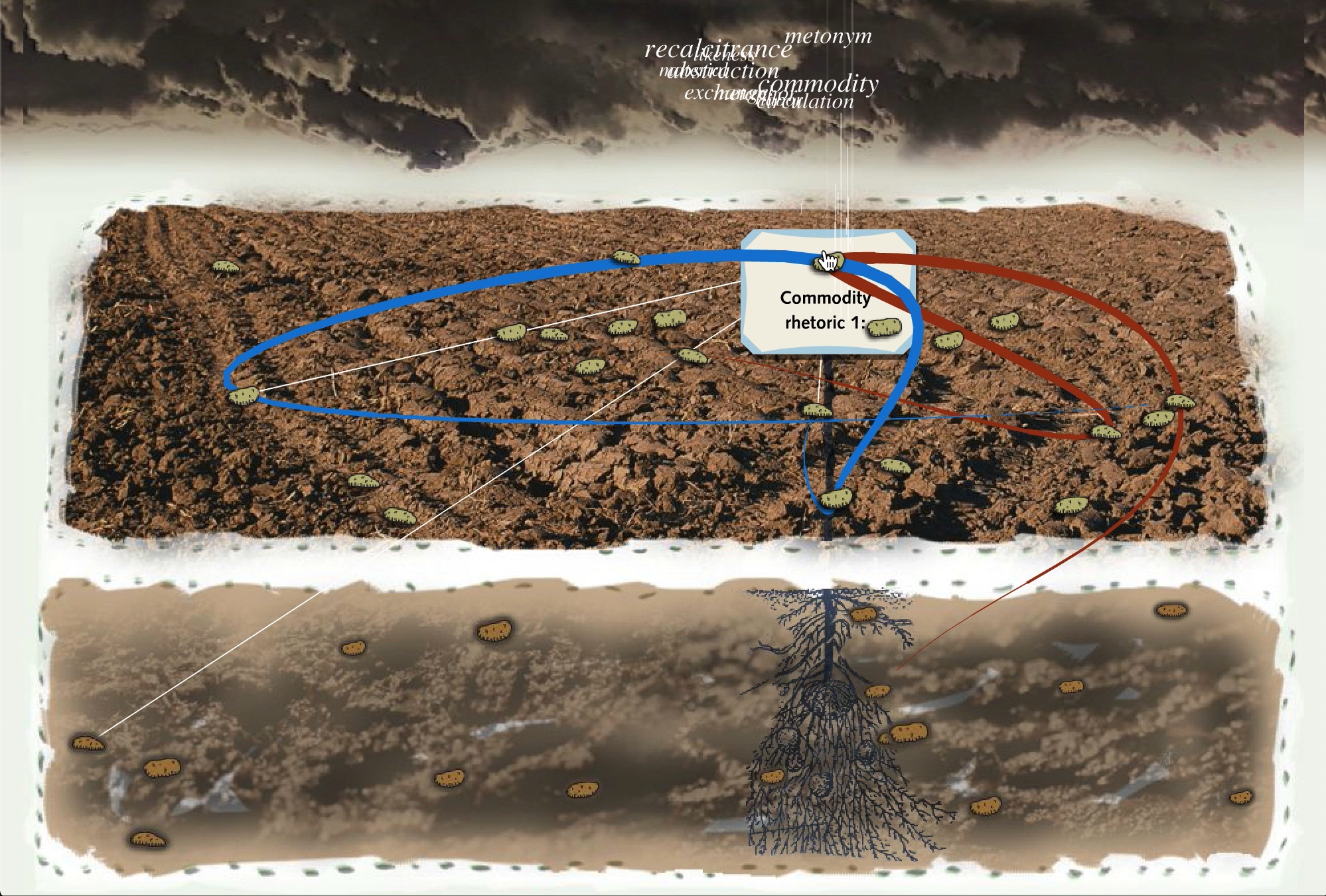
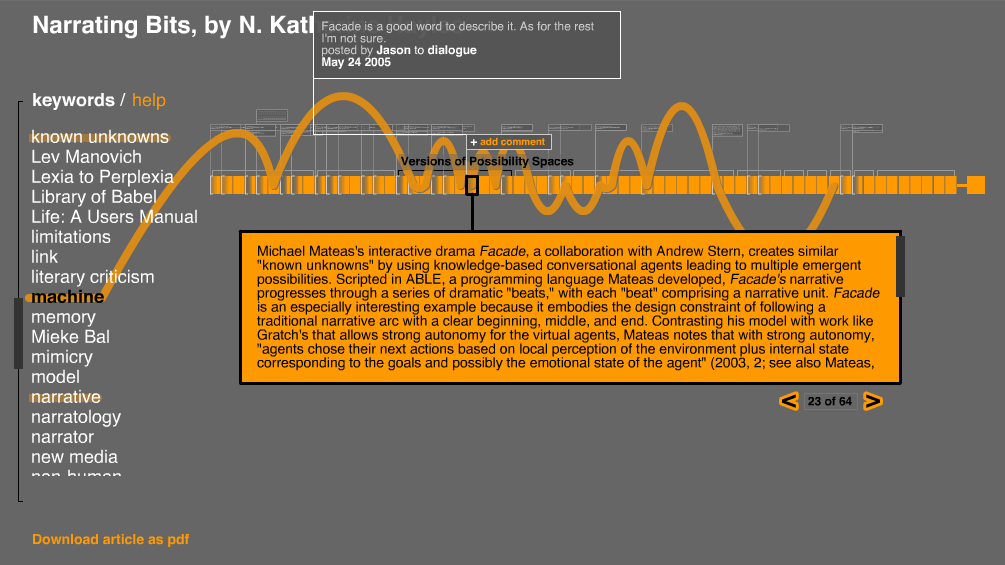
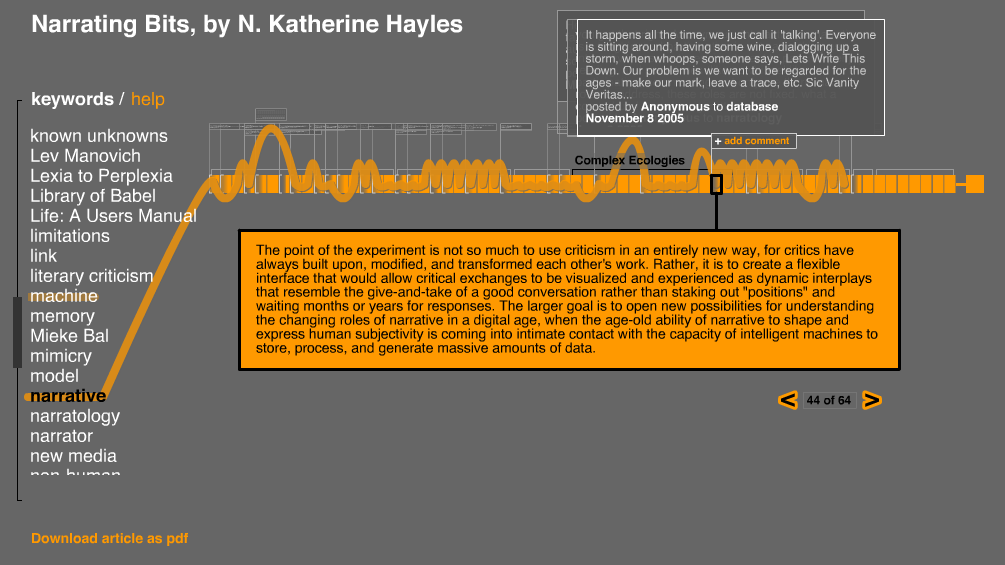
N. Katherine Hayles’ essay is laid out along a segmented line through which keyword intersections are traced with curving lines. Users are able to add their own comments to specific paragraphs and keywords of the essay.

Narrating Bits

Image from The Unmaking of Markets

The Unmaking of Markets

Image from The Vector Space

The Vector Space

Image from Hollowbound Book

Hollowbound Book

A diptych format allows for dialogue between images, texts and audio from various incarnations of Castle Wolfenstein along with autobiographical details. Screenshots from the game initially appear whole, but slowly begin to fragment in 3D space. Audio recordings of the artist and a friend playing the early 80’s version of Castle Wolfenstein are included, along with transcripts. A photo and excerpt from a newspaper article entitled “Computer Mania” which profiled the artist’s family as early adopters of home computing.

The persistence of hyperbole

Image from Syncopation for Programmers

Syncopation for Programmers

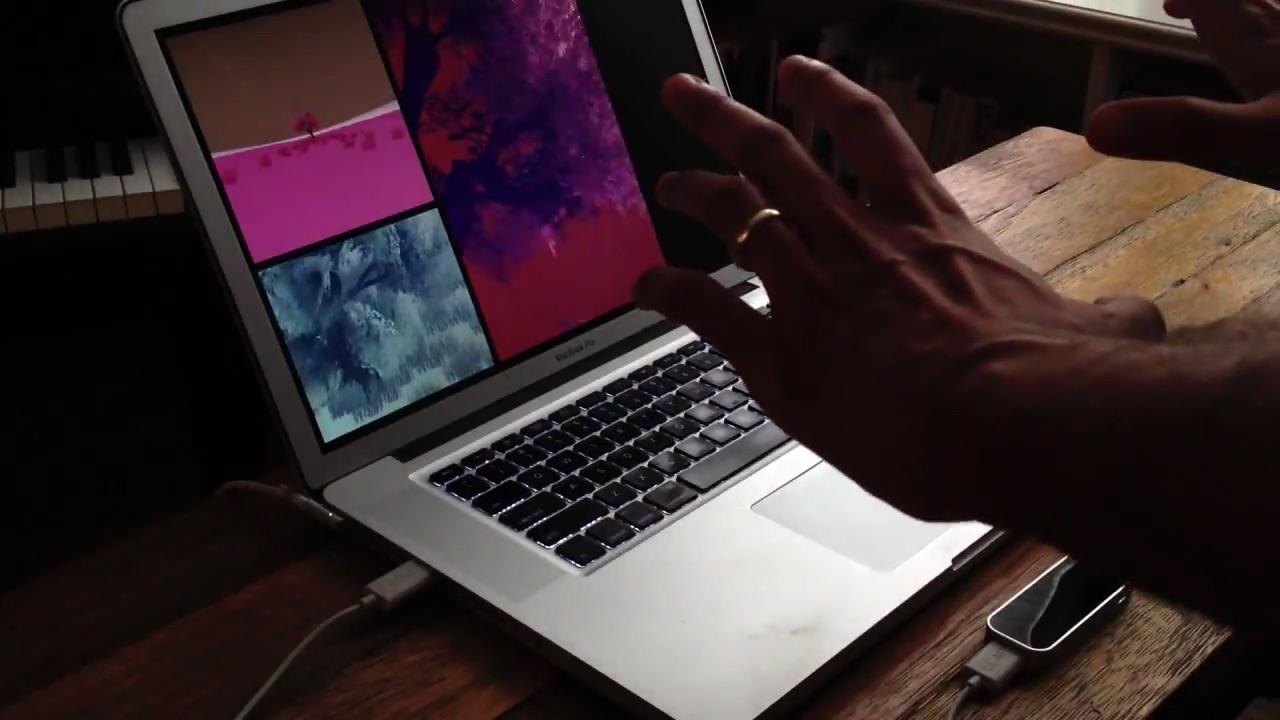
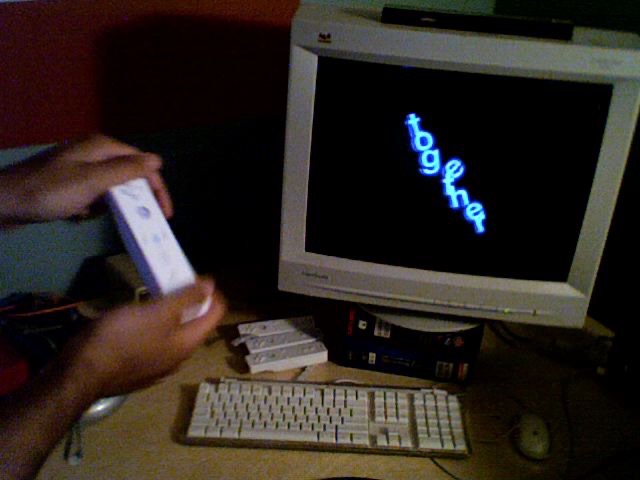
The speed, position and direction of the user’s mouse movements are turned into an textual-musical-visual poetry performance. The naturally expressive motions of the user become grounds for play, experimentation and performance.

Story Problem

Image from Chroma

Chroma

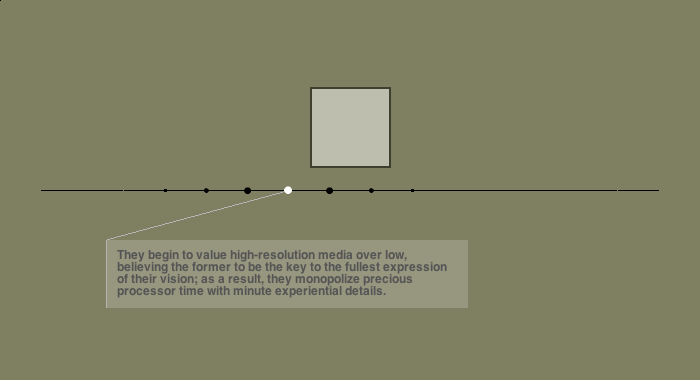
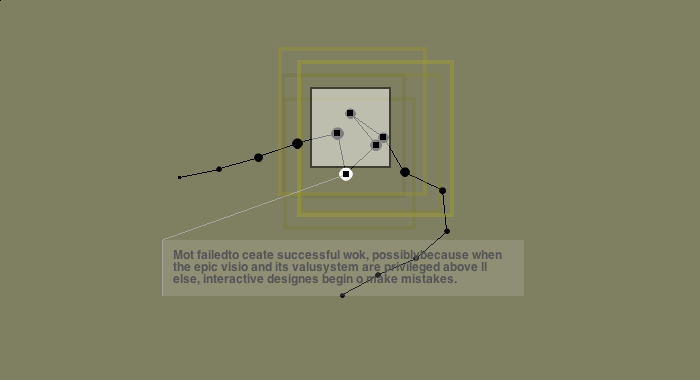
At the piece begins, its argument is laid out in linear fashion, reflecting the epic mindset’s tendencies to create static structures. Once the user begins to reshape the argument, placing pieces of it inside the box, the text begins to disintegrate. Upon placing the whole argument inside the box, the user simultaneously destroys the text and symbolically achieves the bounded condition so conducive to creativity in the digital world.

Resisting the Epic

Image from The Lair of the Marrow Monkey

The Lair of the Marrow Monkey

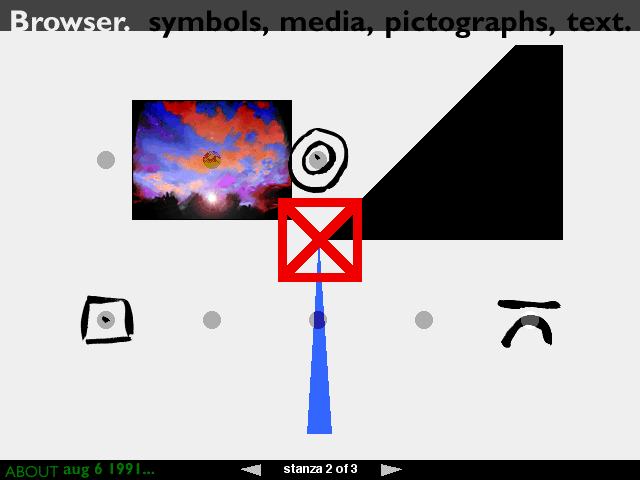
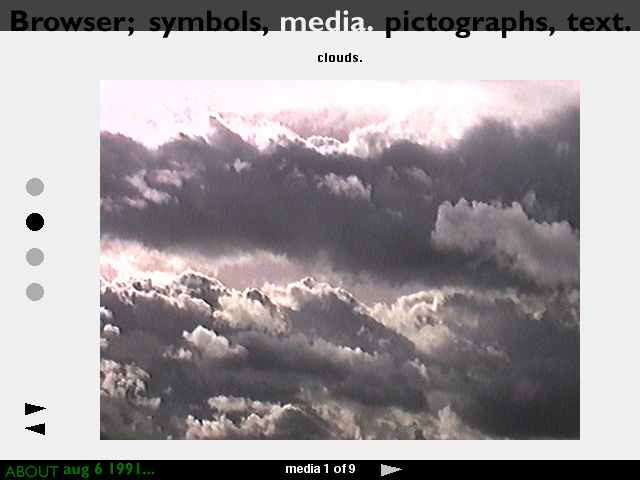
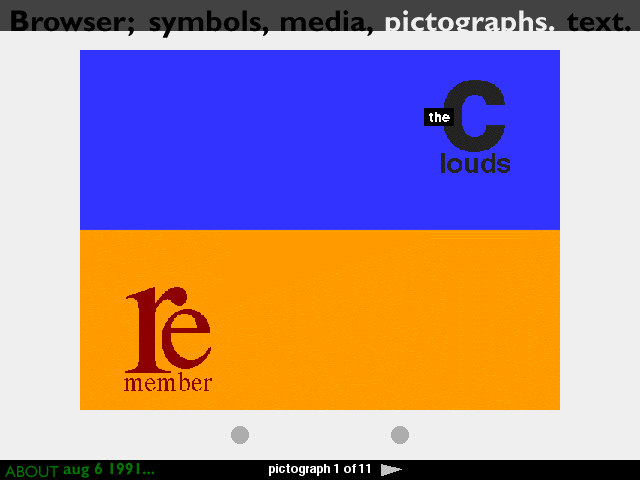
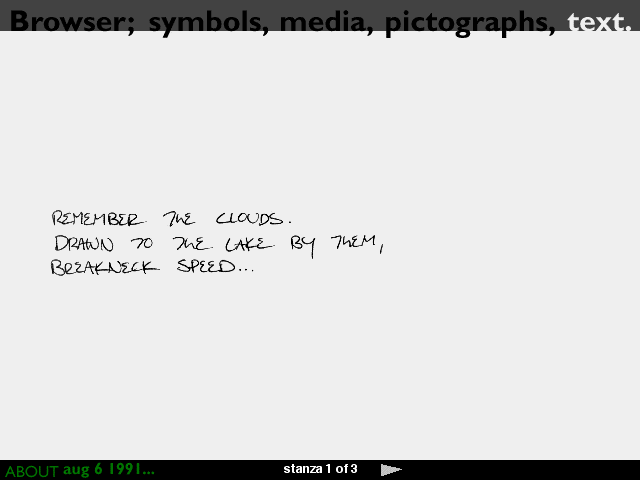
The “Browser” area allows users to playfully remix the raw elements from a given stanza of the poem--images, symbols, and pictographs. Images and video from the locations described in the poem are used to provide users with a sense of context before reading a given stanza. The “Pictograph” area combines graphics inspired by the poem’s symbols, media and text to create a pictographic representation of a line. The appearance of the text is the final step in the cyclical navigation structure of the piece.

aug 6 1991
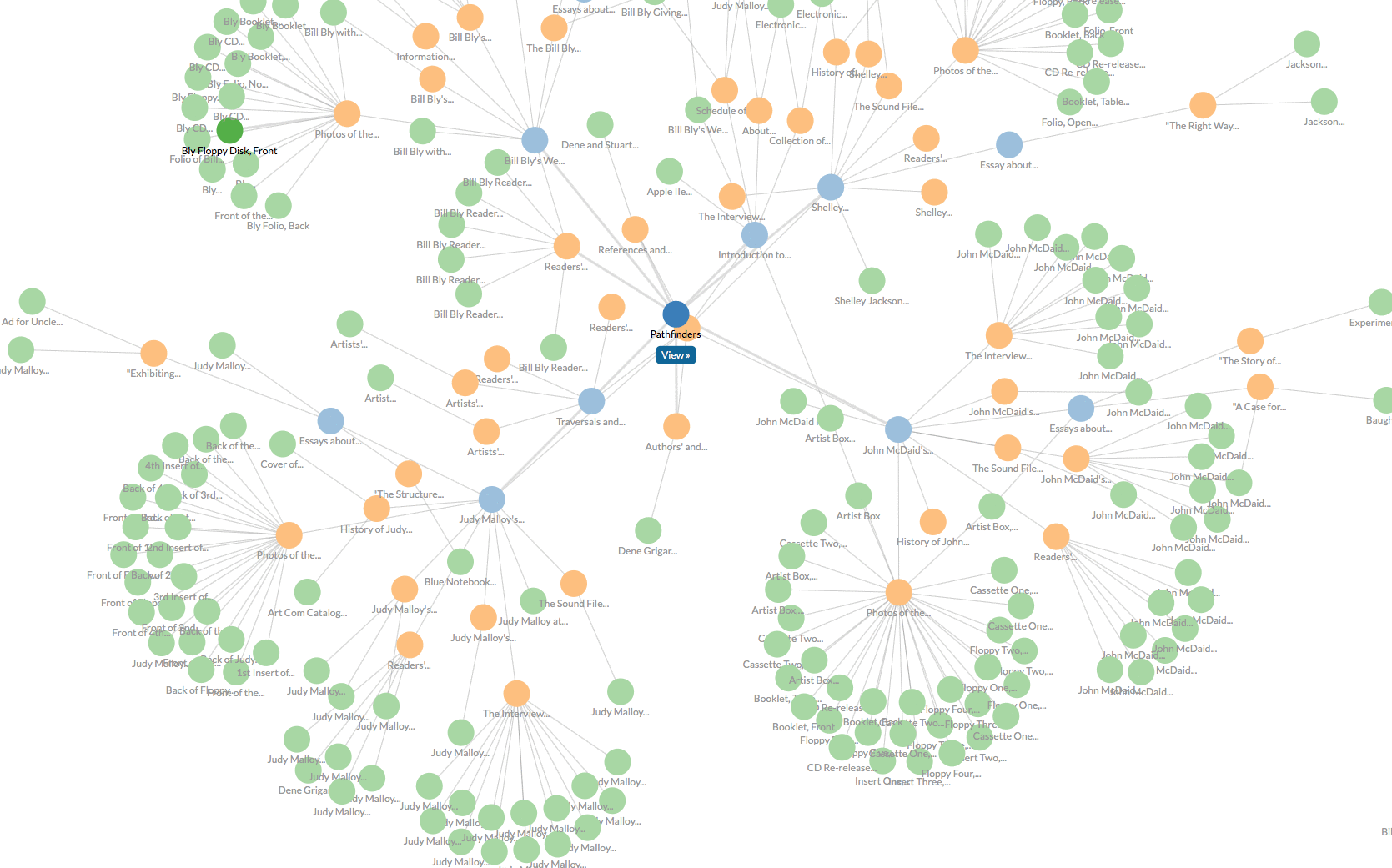
Image from The Dark Eye

The Dark Eye